Newcastle Bifacial Solar Panels
If you’re considering solar power for your home or business in Newcastle, NSW, our Newcastle bifacial solar panels might be the way to go. These innovative panels, like the Jinko Bifacial 54HL4R-BDV we use at Newy Solar Co, can capture sunlight from both sides, potentially boosting energy output. Given Newcastle’s sunny climate, they could maximize your solar investment, making them a top choice for locals searching for the best solutions for solar power in Newcastle.
What Are Bifacial Solar Panels?
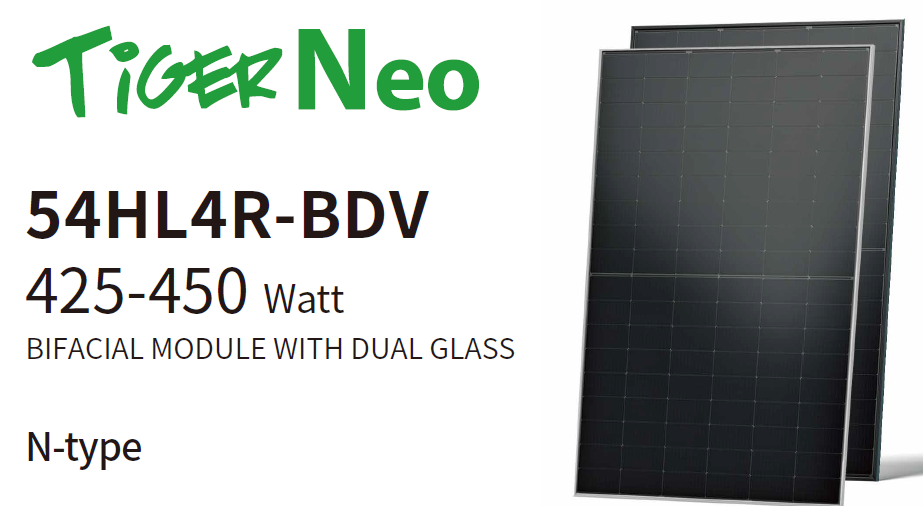
LET’S BEGIN. Bifacial solar panels are designed to generate electricity from both the front and back. Unlike traditional monofacial panels, they have a transparent back sheet and dual-glass design, like the Jinko 54HL4R-BDV, which uses N-type technology and outputs 425-450 watts. This means they absorb direct sunlight on the front and reflected light on the back, increasing overall energy capture. For Newcastle residents, this translates to more power from the same space, perfect for cutting those rising electricity bills.
How Do They Work and Their Benefits?
The Jinko Bifacial 54HL4R-BDV works by using high-efficiency N-type cells to convert sunlight into electricity from both sides. The front grabs direct rays, while the back captures light bouncing off surfaces like your roof or ground, potentially boosting energy production by up to 30% in optimal conditions Bifacial Solar Panels: What You Need to Know | EnergySage. (30% is extreme – you are unlikely to get 30% more).
Durability of Bifacial V Monofacial Solar Panels
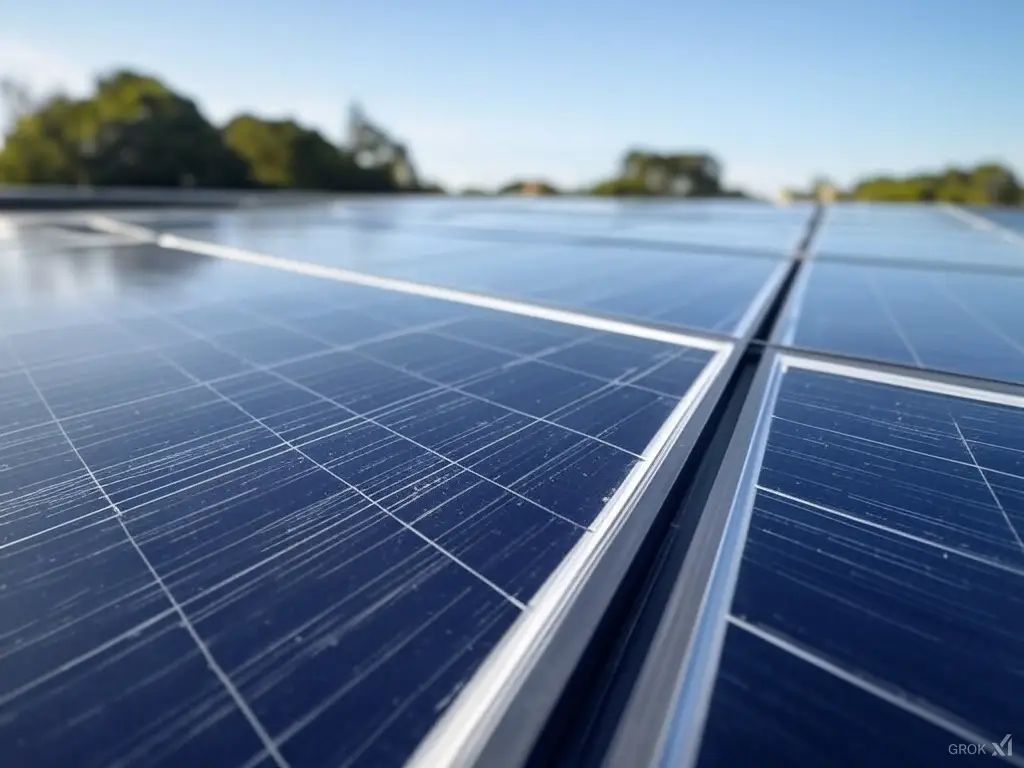
Sometimes when a gun-ho solar power installer is chucking in a solar panel, they will inadvertently scratch the backside of a solar panel. This is BAD – especially for a monofacial panel
INSIDER SOLAR POWER INSIGHT: The backside of a monofacial solar panel is typically covered in a PVA style encasing. Just under this encasing, lies all the tiny and critical electrical connections that make your solar power work. If this backside is scratched, through the installer, through something happening over time like scratches from cable ties, or devris, then these scratches can cause the solar panel to fail early – literally – it can be the demise of a solar panel.
Bifacial panels do not have this risk – as both sides are encapsulated with glass! Hence, the bifacial is a clear winner in the durability test in this area.
When to Use Bifacial Panels in Newcastle
These panels shine brightest in ground-mounted or tilt mounted systems, where light can reach the back side, especially with reflective surfaces like light gravel or white rooftops. They are also great in commercial setups when power maximization is the primary design factor, over cost.
For standard residential roofs, they can work, but you’ll want our Newy Solar Co team to design for optimal light exposure. This ensures they fit your needs, whether you’re in Merewether or Charlestown, or really wherever you are looking for solar, the balance between cost, production, and how much money you make all comes into consideration.
Newy Solar Co: Your Local Experts
At Newy Solar Co, we’re Newcastle through and through, offering tailored solar solutions, including installation and maintenance, for the Hunter Region. We’ll help you decide if the Jinko Bifacial 54HL4R-BDV is right for your setup, ensuring an easy, reliable install. Contact us for a free quote, and let’s make solar simple and affordable for your home or business.
Detailed Breakdown of Jinko Bifacial 54HL4R-BDV
- Specifications: The Jinko 54HL4R-BDV is a bifacial, dual-glass, N-type panel with a power output of 425-450 watts, as confirmed by Jinko Solar JKM440N-54HL4R-BDV (BFR, BIF, DG) | SolarTraders. It uses advanced cell technology for high efficiency, suitable for Newcastle’s conditions.
- How They Work: They absorb direct sunlight on the front and reflected light on the back, with potential energy gains up to 30% in optimal conditions, as per Bifacial Solar Panels: What You Need to Know | EnergySage. This is enhanced by reflective surfaces like white roofs or light-colored ground.
- Advantages: Increased energy production (up to 30%), durability due to UV-resistant dual glass, and reduced BOS costs due to higher efficiency per square foot, as noted in Bifacial Solar Advances with the Times—and the Sun | News | NREL.
- When to Use: Best for ground-mounted systems, commercial rooftops with reflective surfaces, and areas with high sunlight reflection, as mentioned in Bifacial Solar Panels: Innovative And More Efficient – SolarReviews. They are less practical for standard residential rooftops unless designed for optimal light exposure.
| Feature | Bifacial Solar Panels (Jinko 54HL4R-BDV) | Monofacial Solar Panels |
| Light Capture | Both sides (front and back) | Front side only |
| Energy Production | Up to 30% more in optimal conditions | Standard, no back-side contribution |
| Durability | UV-resistant dual glass, high resistance | Standard, may degrade faster |
| Installation Suitability | Ground-mounted, reflective rooftops | Standard rooftops, less space-efficient |
| Cost Efficiency | Higher upfront, potentially lower LCOE | Lower initial cost, less efficient |