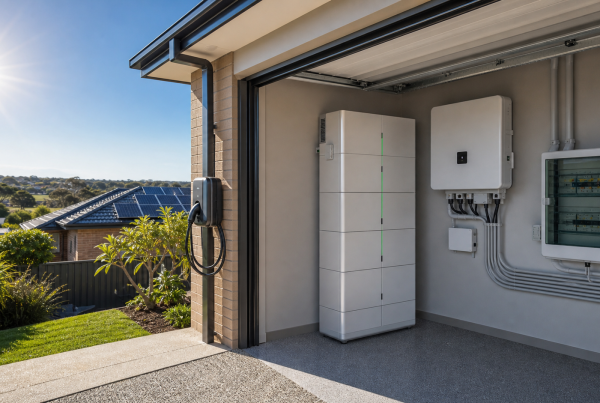
Have you got solar already and are annoyed at the fact your exporting all of your power for a pittance and it’s not what it used to be? We understand that annoyance, and getting a battery for your solar system here in Newcastle is the way to tie it all together. This blog will run you through what you should think of, different products, and thing you may never have heard or thought of when considering a solar battery for your existing solar power.
For those who don’t have solar batteries or solar power yet but are looking to do it – this blog is also very applicable to you.
First: About Newy Solar Co
Newy Solar Co are Newcastles trusted, and competent solar power and solar battery installers servicing Newcastle, Maitland, Lake Macquarie and the Hunter. We pride ourselves on genuine advice and service, and offering a product and solution that meets and exceeds the needs of our clients. When we leave your property, you will be thrilled at the level of service you have received during the whole process and as such you will refer us to all of your friends
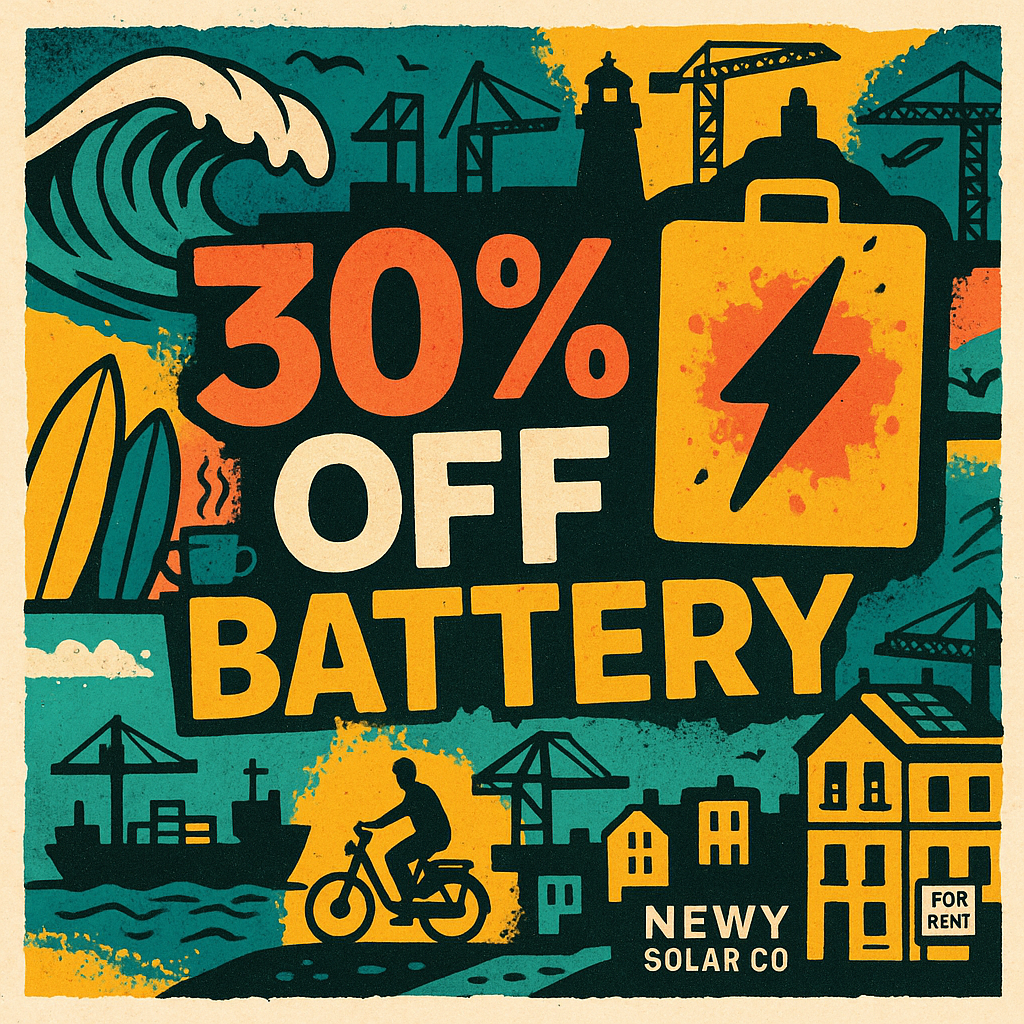
Second: Click the image to Get Offer, Rebate Spots are Limited
Begin: Newcastle Solar Battery Considerations
If you have solar or not, the main consideration people look for when considering if a Newcastle solar battery is worth it under the federal cheaper home batteries program is simple: Is the battery going to repay itself or not? Historically, my answer to that question has always been a resounding NO. Batteries simply did not present themselves with a Return on Investment for the consumer, and as we are not here to simply sell but to achieve true results for our customers, then this had been our advice for those groups of people.
Why Batteries
This is a very easy one. Feed in Tarrifs, the money you are paid to send electricity generated by your solar power back into the grid, has dropped and will continue to drop to zero, (our own forecast, based historically) You send lots of power to the grid for basically nothing, but you import power for an ever increasing price! Batteries solve this problem.
The Federal Cheaper Home Battery Program
That had always been our advice, until the federal cheaper home battery program came into effect from the 1st July 2025. When this came out, our advice changed.
What is the Federal Cheaper Home Battery Program
Simply, the Federal Cheaper Home Battery Program is a federal initiative to encourage homeowners to install batteries in their household. The belief is that batteries will stabilise the grid, and instead of peak power being exported by solar power systems during the middle of the day, that power will be stored in a battery and then spread over the remainder of the period, including peak times such as evening and morning. This will help in turn to stabilise the grid and curb the peaks and troughs of energy demand from a grid supply point of view.
The offer right now in simple terms, is up to 30% off a solar home battery in the year of 2025. This will decrease each year and go to zero in 2030. So – the market is hot right now, because the value of rebates for home batteries is extremely high – the highest in-fact, it will ever be. People recognise this and are putting in batteries now en mass.
So – from the 1st July – our advice changed – batteries were not worth it – but now with 30% off we think they are most definitely worth it, and that if you are in Newcastle, Maitland or Lake Macquarie you should call us on 0468 336 370 or submit a form here.
How a solar battery achieves a Return on Investment
Principally, you will outlay money for the battery system. Each year, that battery system will save you money predominantly because you save money on import costs of electricity. This is the modelling that is used to calculate the payback.
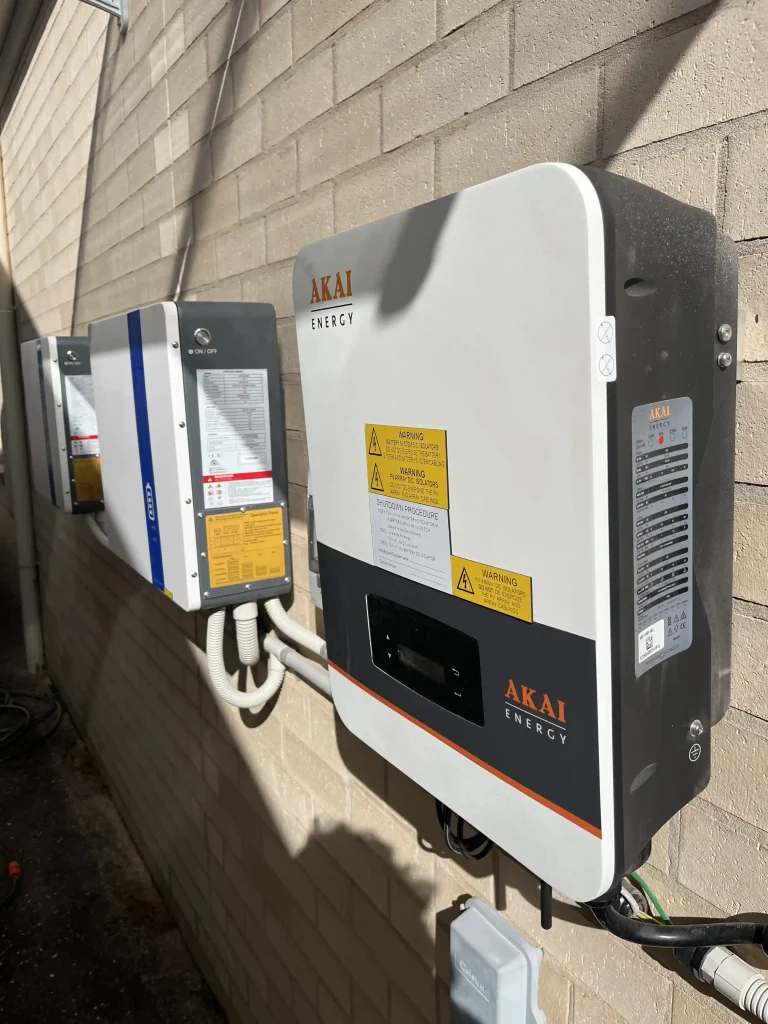
Akai Energy Systems solar power inverter and 10 kw/h battery system as we installed in Shoal Bay NSW.
Easily understand here if a solar battery is worth it;
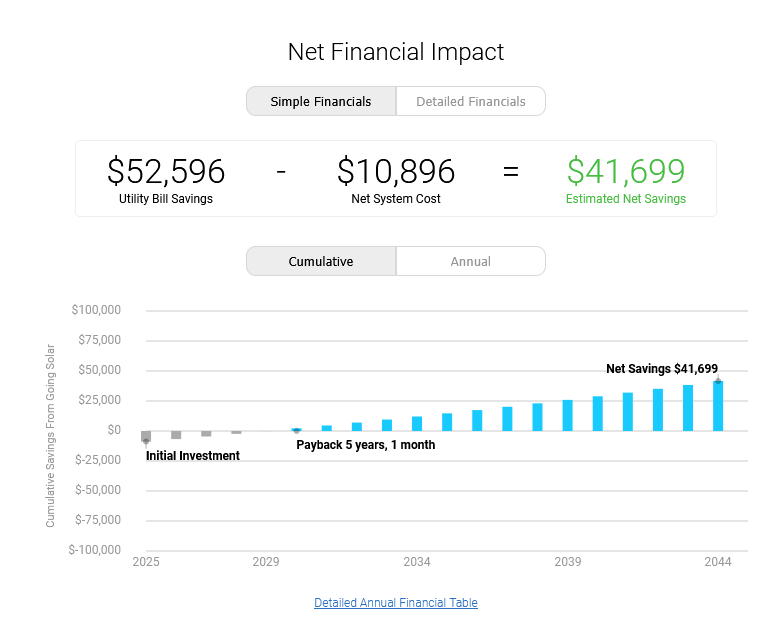
When we send you a quotation, we will give you something that looks like the below image. It is a simple chart to tell you when the system will pay itself off and the cumulative savings of the system. We get this after we put your specific electricity consumption and solar generation details into our software. It then models the solar, batteries, and your electricity consumption profile to see how much you can save.
It then will look at how much you paid for the system (how much our quotation is) and models your payback! Simply put, the solar and battery system saves you money each year. How much money is saved is derived from a technical analysis of your specific metrics, and then we derive the cost of the system, to the amount of savings expected each year! This gives us the estimated payback period, and then you can make an informed decision about whether or not you want to proceed with the solar power quotation.
Conclusion: Is a Home Battery Worth the Investment?
Thanks to the Federal Home Battery Program, the economics of home batteries in Australia have improved dramatically. In general, battery systems now tend to pay for themselves within ~ 4–8 years for a wide range of households. This is within or just beyond the typical 10-year warranty, meaning the system can effectively pay off its cost and then continue to provide savings (plus backup power and energy security) for years after. For many consumers, that ROI is acceptable – especially considering electricity prices are projected to keep rising, which will further shorten payback times as your avoided cost per kWh increases.
Scenario Recap: If you’re a high usage household with a large $3k+ annual bill, investing ~$10k–$15k in solar + battery can nearly eliminate your bill and pay back in as little as 4–6 years. Average families spending around $2k/year might invest ~$10k and see ROI in ~5–7 years on average. Even smaller systems for low users can break even in ~6–8 years, which is a significant improvement from the >10-year paybacks of the past.
And if you already have solar, adding a battery typically shaves off most of your remaining power costs; expect paybacks around 5 years depending on usage, which is still a solid return for the added comfort of having stored power.
Finally, a word on the less practical and paper side of things: While dollars-and-cents are important, remember to factor in the intangible benefits of a battery: backup power during outages, protection from future tariff hikes, and the satisfaction of greater energy independence. These don’t show up in a simple ROI calculation, but they add value for many homeowners. Overall, with the generous federal rebate in place until 2030, the case for home battery storage has never been stronger – it has moved from a niche, long-payback proposition to a mainstream investment with a compelling 4-8 year payoff for a vast number of Australian households. If your household’s usage profile matches the scenarios above (especially if you have high evening usage and low feed-in credits), a home battery is now likely to pay for itself well within its lifespan, making it an attractive component of your sustainable home energy solution.
Products we use
We mainly install Sigenergy, Pylontech and Tesla Powerwalls as our chosen batteries. Each one we choose depending on your specific scenarios. All our products are backed through our local wholesalers, Lawrence and Hanson in Newcastle NSW.
Below is the datasheet from one of our favourite batteries, the Pylontech FORCE H3X