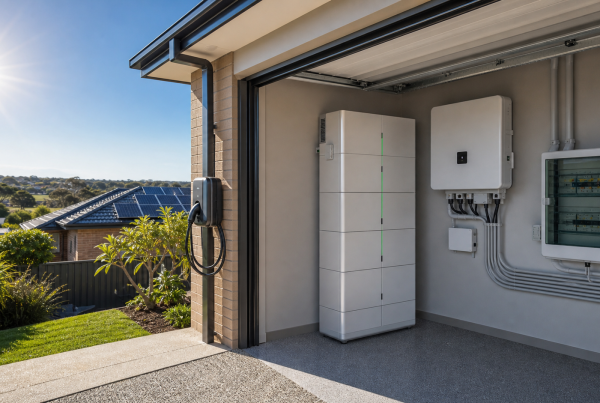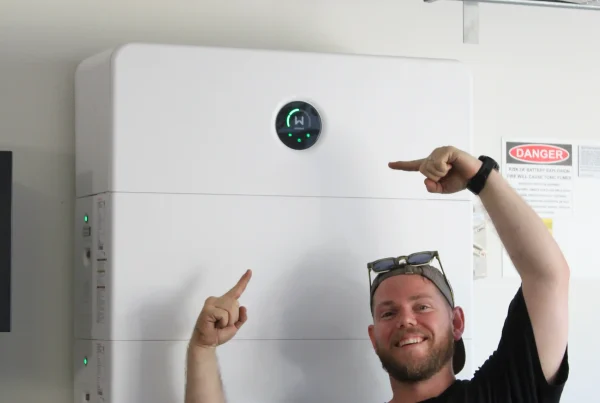
Rooftop solar and home batteries are transforming how people in Newcastle, Maitland and Lake Macquarie manage electricity. By 2026 more than four million Australian homes will have panels on their roofs and battery prices are falling, making storage practical for households and businesses. Yet lower hardware costs are only part of the story; new energy tariffs and storage strategies determine how much value you get from your system. With reforms such as the upcoming Solar Sharer scheme offering three hours of free power during the day, it’s never been more important to match your energy plan to your solar and battery setup.
This guide explains how the latest energy reforms work, outlines battery management strategies to maximise self‑consumption, and shows how to choose the right plan for your home or business. We reference official sources like the NSW Home Solar Battery Guide and recent government announcements to keep the advice current and reliable.
What’s changing: free energy windows and smart tariffs
In late 2025 the Australian Government announced a Solar Sharer program to encourage households to shift consumption to the middle of the day. From mid‑2026, electricity retailers in NSW, south‑east Queensland and South Australia will be required to offer a plan that includes three hours of free electricity each day. The free period will occur when solar output is high (around midday), reducing stress on the grid. To access the offer you’ll need a smart meter, and savings will depend on how much of your consumption you can shift to the free period. The federal energy department estimates that a single‑person household shifting 10 % of their usage into the free window could save around nine per cent on bills. Retailers such as AGL, OVO and Red Energy already provide free‑period plans and will work with government on the detailed design.
While the Solar Sharer plan isn’t mandatory for all customers, it signals a broader shift towards time‑of‑use and demand‑responsive tariffs. Future energy plans will reward customers who can consume more during low‑demand hours and reduce exports when the grid is congested. Understanding these tariffs and aligning them with your solar and battery system is crucial.
Battery management strategies: solar buffer vs tariff optimisation
Batteries let you store excess solar generation and use it when you need it, but how you manage them matters. The NSW Home Solar Battery Guide describes two common strategies for household batteries:
Solar buffer (self‑consumption)
Self‑consumption or solar buffer is the default strategy in most batteries. It prioritises using your solar electricity to power appliances first, then charges the battery with any excess, and only exports surplus energy to the grid when the battery is full. When your consumption exceeds solar generation (for example in the evening), the battery discharges to avoid importing from the grid. This strategy is simple and works well with flat‑rate tariffs or low feed‑in tariffs (FiTs) because it reduces grid imports and maximises self‑use of your solar energy.
Tariff optimisation
Tariff optimisation adds an extra layer by considering the price of electricity at different times of day. It uses weather forecasts and historical consumption to decide whether to charge the battery from the grid during off‑peak periods and how much solar should be diverted to the battery during the day. A typical weekday routine might look like this:
- Early morning: meet breakfast‑time demand from the partially charged battery to avoid high morning peak prices.
- Daytime: use solar generation to power appliances and charge the battery.
- Evening: discharge the battery during the peak tariff window, minimising expensive imports.
- Overnight: if a cheap off‑peak tariff is available, charge the battery from the grid to prepare for the next morning.
This strategy is ideal when you have a time‑of‑use or dynamic tariff and a battery that can integrate weather forecasts and price signals via an energy management system.
Choosing the right energy plan for your system
The best plan depends on your consumption pattern, system size and battery capacity. Consider the following factors:
- Free energy windows – Plans with free electricity periods (such as the Solar Sharer offer) are most effective when you can move consumption—pool pumps, EV charging, washing machines—to the specified hours. Batteries can also charge during the free window, increasing stored energy for evening use. A smart energy monitor helps schedule appliances automatically.
- Time‑of‑use tariffs – If your retailer offers off‑peak, shoulder and peak rates, a tariff‑optimised battery strategy can arbitrage prices by charging when rates are low and discharging when they’re high. Look for plans with a generous off‑peak window and check whether the difference between peak and off‑peak prices justifies battery cycling (remember that cycling affects battery life).
- Feed‑in tariffs – FiT rates in NSW are currently modest (often 3–5¢/kWh). If you have a large solar array and small battery, a higher FiT might still be worthwhile. Compare FiTs across retailers, but don’t sacrifice low usage rates for a slightly higher FiT—maximising self‑consumption usually yields better savings.
- Export charges – Network providers such as Ausgrid are introducing export charges to discourage exporting during congested periods. Choosing an inverter with export limiting features can help you avoid these fees and make better use of your battery.
- Plan flexibility and contract length – Some plans lock you into fixed terms or require new hardware. Check exit fees, hardware costs (such as smart meters or demand‑response devices) and how easily you can switch if a better offer arises.
Maximising the benefit of Australian‑made panels and advanced batteries
High‑quality components make it easier to implement advanced energy strategies. Newy Solar Co supplies Australian‑made Tindo solar panels and a range of battery systems including GoodWe ESA, Sigenergy SigenStor, Tesla Powerwall and Red Earth Australia units. These batteries are designed with features that support modern tariffs and virtual power plants (VPPs). For example, the NSW VPP guide notes that most modern systems—Tesla Powerwall 2/3, GoodWe or Sungrow hybrid inverters, Sigenergy SigenStor and others—are VPP‑ready, meaning they can communicate with energy markets and export stored energy during high‑demand events.
When choosing a battery, ask about:
- Energy management software – Does the battery or inverter include an EMS that can handle tariff optimisation and schedule charging/discharging based on price signals? GoodWe’s hybrid inverters and Sigenergy’s SigenStor, for example, offer flexible operating modes suitable for time‑of‑use tariffs.
- Export control and compliance – Check that the system supports export limiting to avoid network fees. Some systems allow per‑phase export limits and remote updates to meet DNSP requirements.
- Warranty and safety – Ensure the battery meets Clean Energy Council and Solar Accreditation Australia standards. Keep up‑to‑date with firmware to maintain cyber security.
Practical tips to maximise your solar and battery
- Understand your energy profile – Use your inverter or a smart meter to track when you consume power. Households that use most energy in the morning and evening can benefit from east–west panel orientation (see our guide on East‑West arrays) and a battery sized to meet evening demand.
- Shift flexible loads – Run dishwashers, washing machines and pool pumps during free or off‑peak hours. Pre‑cool or pre‑heat your home during the free period and switch to battery power later.
- Charge your EV intelligently – Pairing an EV charger with solar and battery allows you to fill up using free solar generation or off‑peak grid power. Our EV Chargers page explains how to integrate chargers with GoodWe ESA and Sigenergy systems.
- Stay informed about policy changes – Monitor announcements from the Australian Energy Regulator and NSW Government. Programs like Solar Sharer may evolve; staying updated ensures you switch plans when better options emerge.
- Engage with virtual power plants – Joining a VPP can earn you additional revenue for letting your battery discharge during high‑demand events. The 2025 NSW incentive pays up to $1 500 for connecting a battery to an approved VPP, and ongoing payments can accelerate pay‑back times.
Frequently Asked Questions
How will free electricity hours affect my battery? During the Solar Sharer free period, your battery may charge from the grid at zero cost. A tariff‑optimised strategy will ensure that the battery is full before the evening peak, but you may need to adjust settings to prevent over‑charging.
Do I need solar panels to benefit from the Solar Sharer plan? No. Households without solar can still take advantage of free midday power by running appliances during the window. However, combining solar with a battery will maximise benefits.
Which retailers offer plans suitable for solar and battery systems? Retail offerings change regularly. Look for plans from major retailers that include time‑of‑use rates, feed‑in credits and free energy windows, and compare them using government comparison sites. Always check the fine print for eligibility and hardware requirements.
Are battery systems from GoodWe, Sigenergy, Tesla and Red Earth compatible with VPPs? Yes. The NSW VPP guide notes that Tesla Powerwall 2/3, GoodWe and Sungrow hybrid inverters and Sigenergy SigenStor are VPP‑ready. Red Earth’s Australian‑made batteries also support remote monitoring and are designed for integration with smart tariffs.
Call to action
Newy Solar Co is Newcastle’s local expert in solar, battery storage and electrical services. We supply Australian‑made Tindo panels and advanced battery systems from GoodWe, Sigenergy, Tesla and Red Earth, and we design systems to suit your tariff and consumption patterns. Whether you want to prepare for the Solar Sharer free‑energy plan, upgrade to a VPP‑ready battery or simply understand your options, get in touch with our team. We’ll help you tailor a system that maximises your solar investment and reduces your bills.