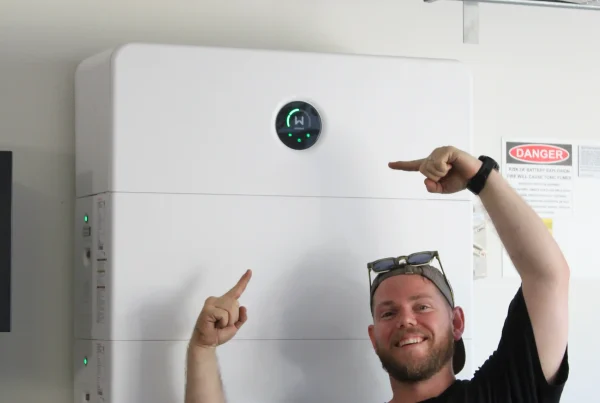
GoodWe ESA Batteries Newcastle: How To Use Free Or Cheap Charging Periods
GoodWe ESA batteries in Newcastle can be a strong fit for homes trying to use more solar, manage evening energy use and take advantage of free or cheap electricity periods where their retail plan genuinely offers them.
The important word is genuinely. A battery strategy should never assume a free period exists forever, applies every day, or works the same way across retailers. The right setup checks the tariff, the battery size, the backup reserve, the solar forecast and the household’s evening load before changing battery settings.
Ask Newy Solar Co to assess a GoodWe ESA battery setup for your Newcastle home.
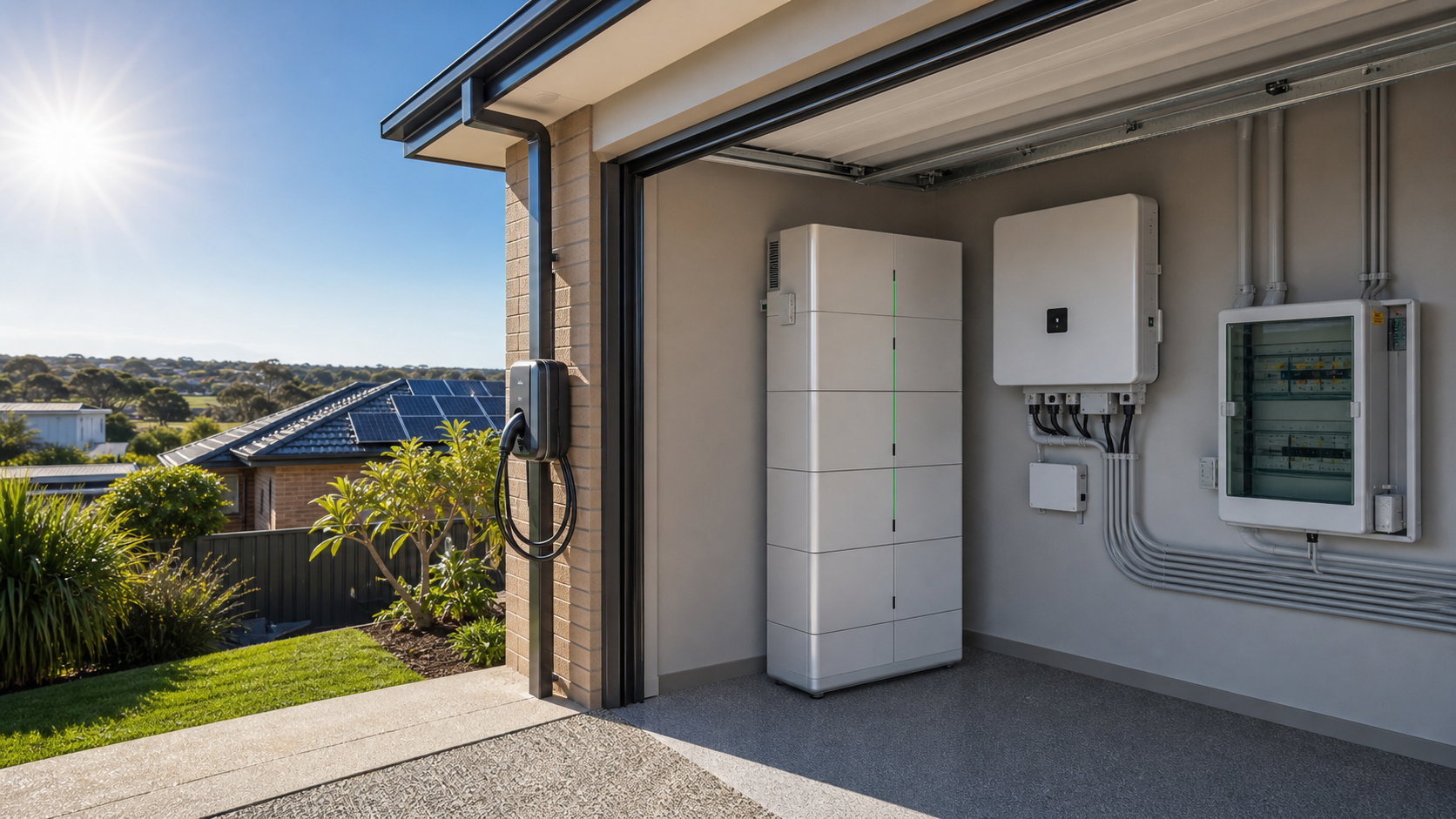
Quick Answer: What Is The Best Way To Use A Free Charging Period?
If your electricity plan includes a free or very low-cost charging window, the usual aim is to charge the battery during that window only when it makes sense, then use that stored energy later when grid power is more expensive.
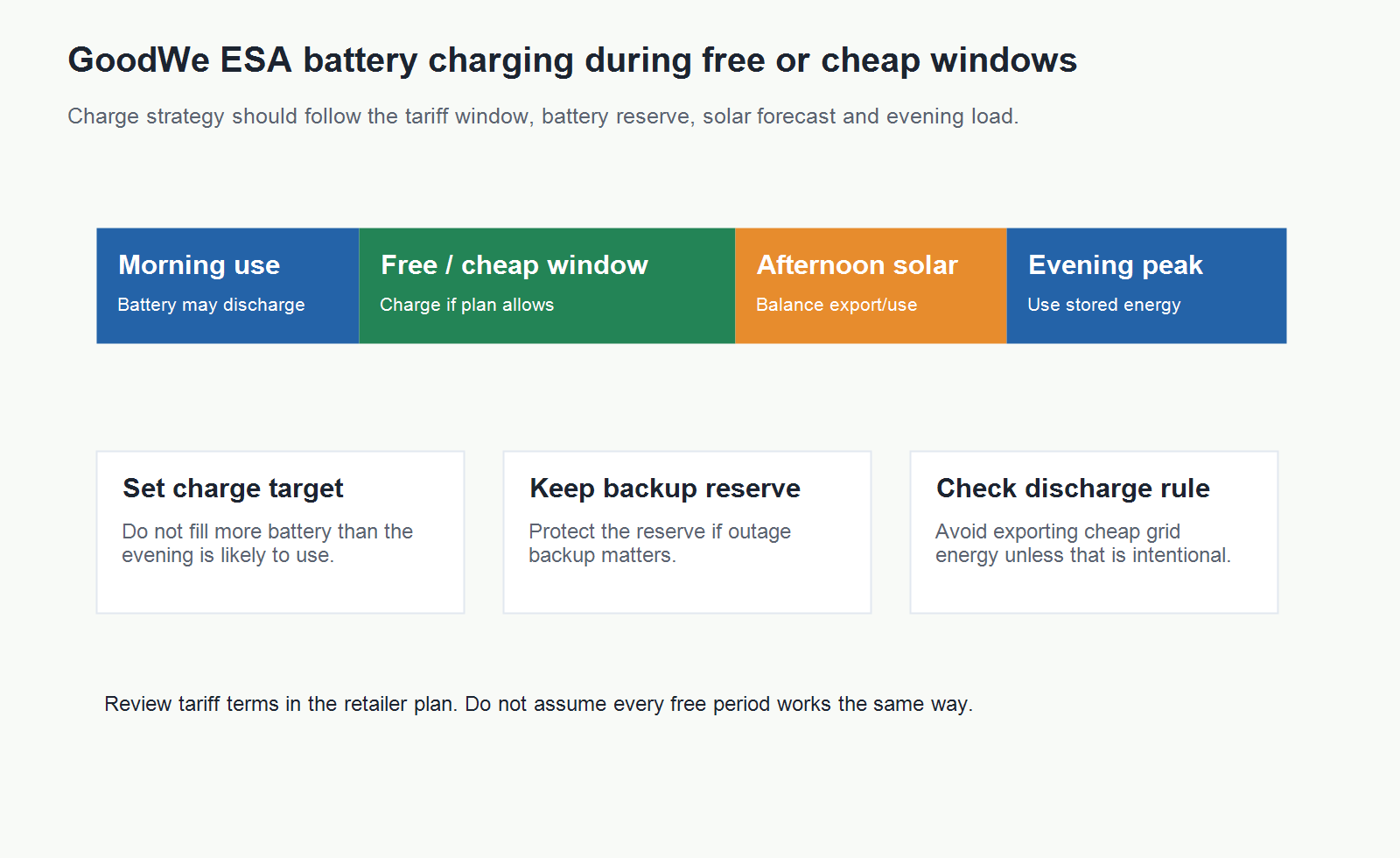
For GoodWe ESA batteries, the practical setup conversation should cover:
- which hours are actually free, cheap or solar-friendly on your retail plan
- whether the battery should charge from grid, solar, or both
- what backup reserve should be protected
- whether the battery should discharge into the house only, or interact with export/VPP settings
- how much usable capacity you really need overnight
- whether EV charging, pool pumps or air conditioning will change the evening load
Why GoodWe ESA Works Well For This Conversation
GoodWe describes the ESA as an all-in-one energy storage platform that combines battery storage, hybrid inverter, battery management system, charger and backup functionality. GoodWe’s Australian battery rebate update also explains that the ESA platform supports modular battery options that can be matched to household needs.
GoodWe lists current ESA module examples as a 5.1 kWh module with 5 kWh usable capacity and an 8.3 kWh module with 8 kWh usable capacity. GoodWe also gives examples such as approximately 13 kWh usable storage from one 5 kWh and one 8 kWh module, and approximately 24 kWh usable storage from three 8 kWh modules.
That flexibility matters because a free or cheap charging window is only useful if the battery is sized and configured sensibly. Too little storage may not carry the home through the evening. Too much storage may add cost or exceed what the household can regularly use.
CTA: If you are comparing GoodWe ESA battery sizes, ask Newy Solar Co to model your evening usage before choosing the number of modules.
Start With The Retail Plan, Not The App
Before changing any GoodWe ESA battery settings, confirm the retail plan. Energy Made Easy is a free Australian Government comparison service for electricity plans. It is useful because free-period, off-peak and solar-friendly offers can change, and the details are set by the retailer.
You want to know:
- the exact free or cheap period start and end times
- whether the period applies every day or only under certain conditions
- whether controlled-load, demand, export or daily supply charges affect the outcome
- whether grid charging a battery is allowed or restricted under the plan
- whether the plan still works if your usage changes
Once those details are known, the battery settings can be checked against the plan instead of guessed.
GoodWe ESA Battery Sizing And The Free Window
A simple way to estimate a charge window is:
usable battery capacity x target state-of-charge change = kWh needed.
For example, moving from 20% to 90% is a 70% swing. A 5 kWh usable module would need about 3.5 kWh to move through that range before losses and charge-rate limits. An 8 kWh usable module would need about 5.6 kWh. A 13 kWh usable example would need about 9.1 kWh.
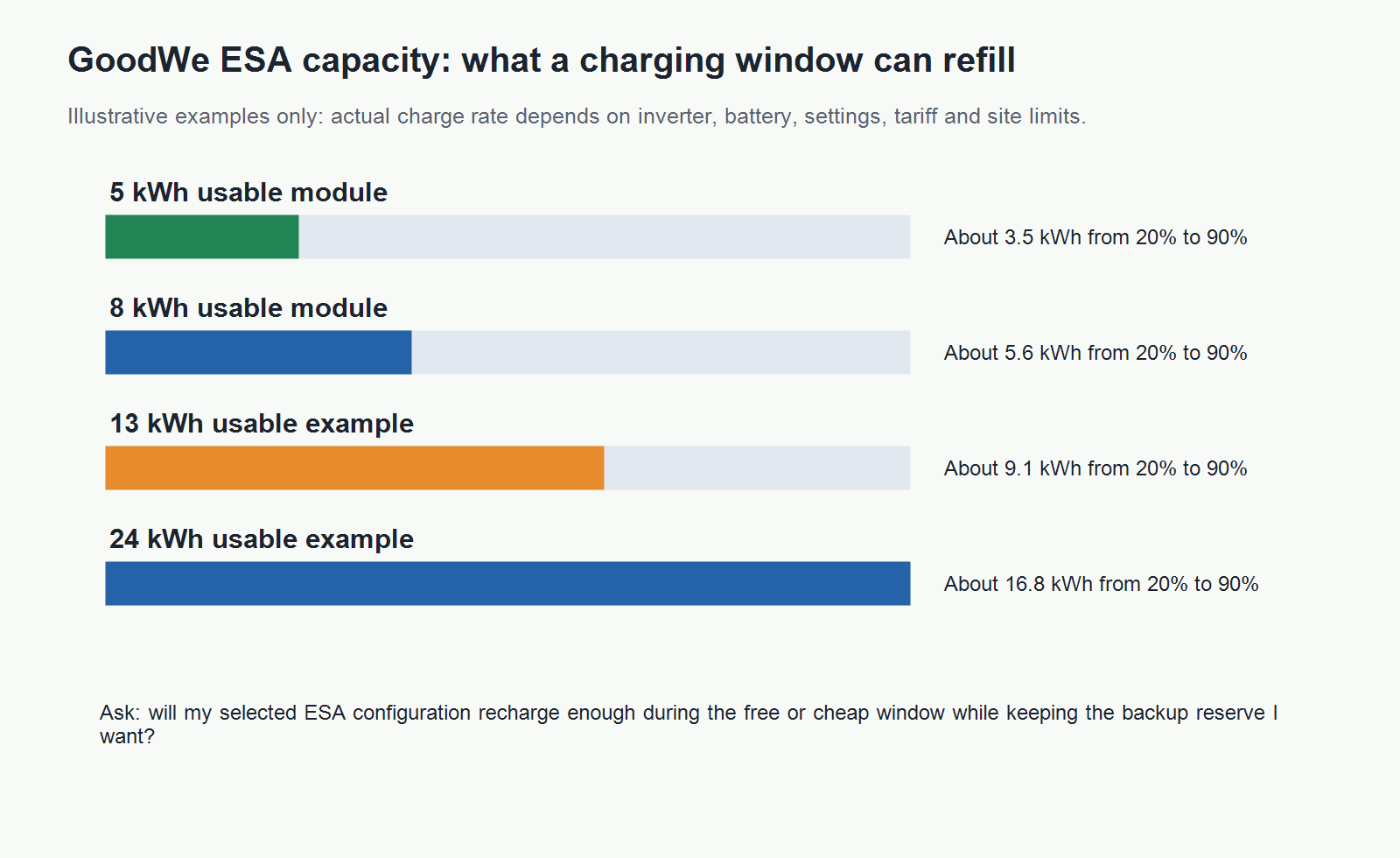
These examples are not savings promises. Actual results depend on the ESA configuration, inverter output, battery settings, household load, solar generation, tariff and site limits.
How To Think About Backup Reserve
Backup reserve is one of the settings that can make or break the experience. If backup matters, the battery should not be allowed to discharge too deeply just to chase a tariff outcome.
A homeowner might choose a reserve that keeps essential circuits protected, while still allowing enough usable capacity for evening energy. The right reserve depends on the loads being backed up, the battery size and how long the household expects to ride through an outage.
Ask the installer to explain exactly what the backup reserve means for your GoodWe ESA setup before approving the final configuration.
Using Ausgrid’s Solar Timing Changes In The Strategy
Newcastle homes are generally in Ausgrid’s network area. Ausgrid’s two-way solar pricing is designed to encourage customers to use solar generation in the middle of the day or export later in the day. Ausgrid also notes that retailers decide how network prices are bundled into retail offers.
That means the battery strategy should be local and tariff-aware. In some homes, the priority may be charging the battery from solar during the day. In others, a free or low-cost retailer window may make grid charging part of the strategy. In many homes, the best answer will change as plans change.
A GoodWe ESA Setup Checklist For Newcastle Homes
- Confirm the exact retail tariff and any free or cheap electricity window.
- Check whether grid charging the battery is permitted and worthwhile under that plan.
- Measure evening household load, not just total daily usage.
- Choose a battery size that matches usage, backup needs and rebate considerations.
- Set a sensible backup reserve.
- Confirm whether the battery should charge from solar, grid, or both.
- Check whether EV charging should be kept separate from the home battery.
- Review the settings after the first few bills and seasonal changes.
Read Newy Solar Co’s GoodWe ESA update for more local GoodWe context.
What About The Federal Battery Rebate?
The Australian Government’s Cheaper Home Batteries Program is available for eligible small-scale battery systems connected to new or existing solar PV systems. The Department of Climate Change, Energy, the Environment and Water says the program provides a discount of around 30% on eligible battery systems between 5 kWh and 100 kWh, with the discount based on usable capacity and STCs.
The same government guidance also warns that bigger is not always better, and says consumers should talk to their retailer or installer about daily electricity use, solar output and inverter output to understand what size battery may be appropriate.
For GoodWe ESA buyers, this reinforces the same point: choose the battery size around actual energy use, not just the largest number that fits on a brochure.
GoodWe ESA And EV Charging
If the home has, or may soon have, an EV charger, the battery settings should be planned with that in mind. EV charging can be a large flexible load. Some homes will want the EV to charge from excess solar. Others may prefer the car to charge in a separate off-peak window so the home battery remains available for evening house loads.
Newy Solar Co can assess EV chargers in Newcastle alongside the GoodWe ESA battery so the two systems are not working against each other.
Mistakes To Avoid
Assuming “Free” Means Unlimited Benefit
A free period is only useful if the plan terms, battery settings and household usage support it. Always check the retailer conditions.
Charging The Battery But Exporting It Later By Accident
If discharge/export settings are wrong, the battery may behave in a way the homeowner did not intend. Ask for the settings to be explained at handover.
Ignoring The Backup Reserve
If backup matters, reserve settings should be protected before chasing tariff savings.
Choosing Battery Size Only Around The Rebate
Rebates matter, but the system also needs to match real evening usage, solar production and future electrification plans.
FAQs
Can A GoodWe ESA Battery Charge During A Free Electricity Period?
It may be possible where the system settings, retailer plan and site configuration allow it. The retail plan terms should be checked before assuming grid charging is available or beneficial.
What GoodWe ESA Battery Size Is Best For A Newcastle Home?
There is no single best size. A useful starting point is evening load, backup needs, solar generation, inverter capability, EV charging plans and the current battery rebate structure.
Should I Fill The Battery To 100% During A Free Period?
Not automatically. The charge target should consider evening usage, backup reserve, battery settings and whether the extra stored energy is likely to be used before the next charging opportunity.
Can A GoodWe ESA Battery Help With Ausgrid Solar Export Changes?
A battery can help some homes use more solar locally instead of exporting it. The best settings depend on household load, solar production, retail tariff and battery size.
Can Newy Solar Co Configure The Battery Settings?
Newy Solar Co can assess solar battery installations in Newcastle and discuss GoodWe ESA configuration goals, including tariff-aware charging, backup reserve and EV charger interaction. Final settings should be confirmed at installation and reviewed after real usage data is available.
Ready To Make A GoodWe ESA Battery Work Properly?
A GoodWe ESA battery should not be installed as a set-and-forget box. It should be configured around how your Newcastle home actually uses energy, when your solar produces, whether backup matters, and whether your electricity plan has free or cheap charging windows.
Request a GoodWe ESA battery assessment with Newy Solar Co.