Top 5 Solar Battery Myths Busted for Newcastle & Lake Macquarie Residents
Many homeowners in Newcastle, Lake Macquarie, and the broader Hunter Valley are switching to solar energy. However, several solar battery myths still give residents pause. At Newy Solar Co Pty Ltd, we often hear questions based on misconceptions about solar storage systems. This educational guide will debunk the top 5 myths about solar batteries, with easy-to-understand facts backed by reputable sources. By busting these myths, Newcastle, Lake Macquarie and Hunter residents can make informed decisions about gaining energy independence with solar battery installation.
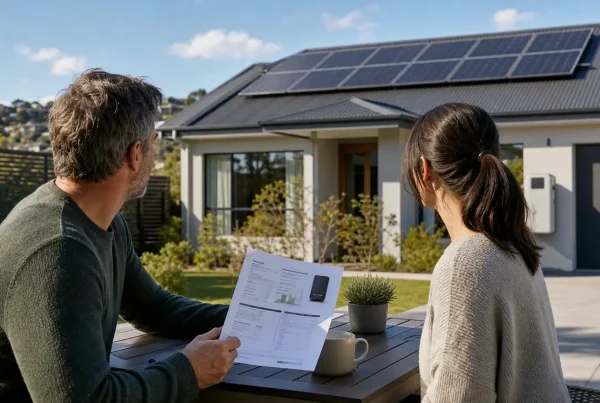
A typical suburban home in the Newcastle area with solar panels installed on the roof. Solar battery storage systems allow such homes to store excess solar energy for use at night, increasing energy independence.
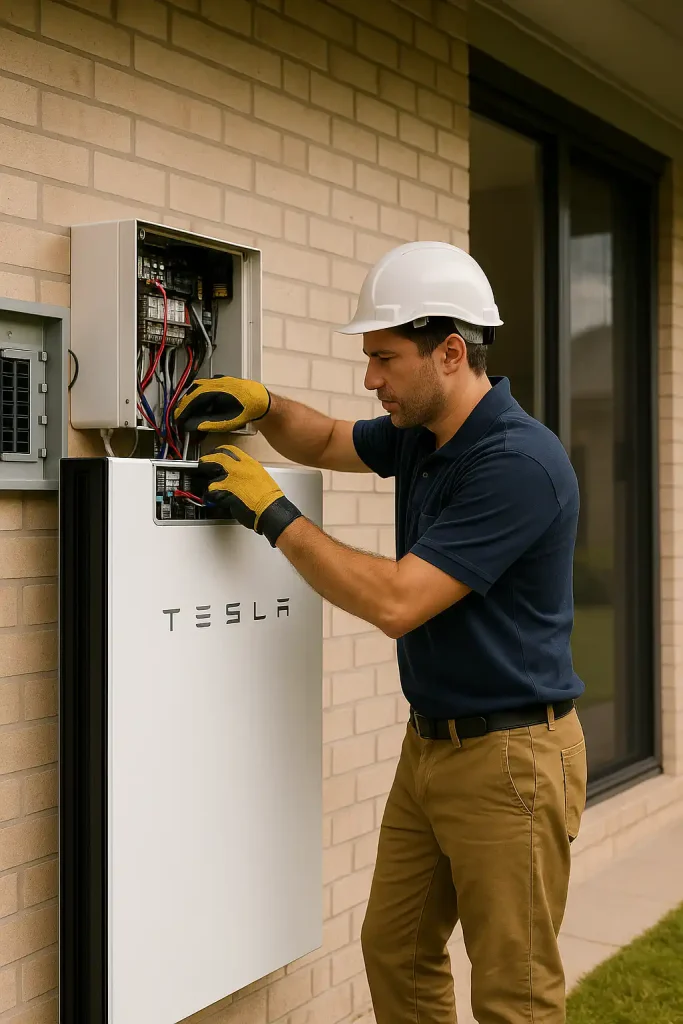
A Newcastle Solar Installer from Newy Solar Co installes a Tesla rendition
Myth 1: “Solar Batteries Are Too Expensive and Not Worth It.”
The Myth: Many people believe that adding a solar battery will never pay off because the upfront cost is high. This myth suggests solar batteries are a luxury only for the rich, with little financial return.
The Reality: While solar batteries do require an upfront investment, costs have been dropping steadily and incentives are available. In fact, the price of home battery systems is decreasing as more manufacturers enter the market and technology improves. Increased competition and production volume have driven costs down, much like what happened with solar panels over the past decade. Government incentives are also making batteries more affordable. For example, starting July 2025, the Australian federal government’s Cheaper Home Batteries Program provides roughly a 30% rebate off the cost of a new battery system. This federal rebate is delivered as tradable certificates – for instance, a 10 kWh battery can receive about a $3,720 discount under the program. These incentives significantly improve the return on investment for homeowners in Newcastle and Lake Macquarie considering solar storage.
Importantly, batteries can save money over time by maximising the use of your solar power. Instead of selling excess solar energy to the grid for a low feed-in tariff, you can store it and use it later, offsetting expensive evening electricity rates. One Australian analysis found that adding a home battery could generate around $900 in annual savings for the average solar-equipped household by reducing grid purchases. Actual savings depend on your usage patterns and tariffs, but many Hunter region homeowners find that a battery significantly cuts their power bills. Beyond dollars and cents, there’s added value in having backup power and greater energy independence – benefits that are hard to put a price on. The bottom line is that solar batteries are becoming more cost-effective, especially with rebates. Previously they weren’t and we accept that – we actually have been anti-battery simply because the cost/benefit ratio just didn’t add up for consumers. But that scene has changed with the Federal rebate – and now it does. Far from being “only for the rich,” they’re an increasingly smart investment for everyday residents in Newcastle, Lake Macquarie, and the Hunter Valley.
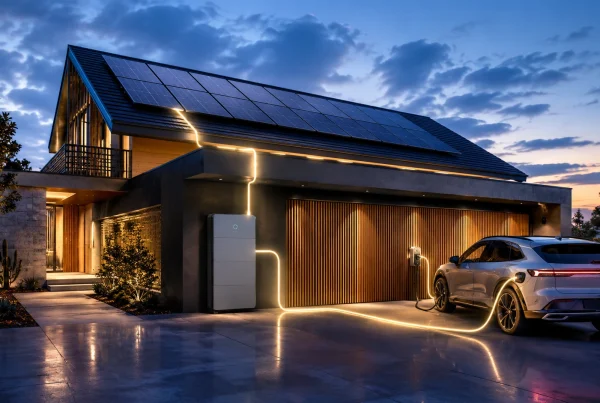
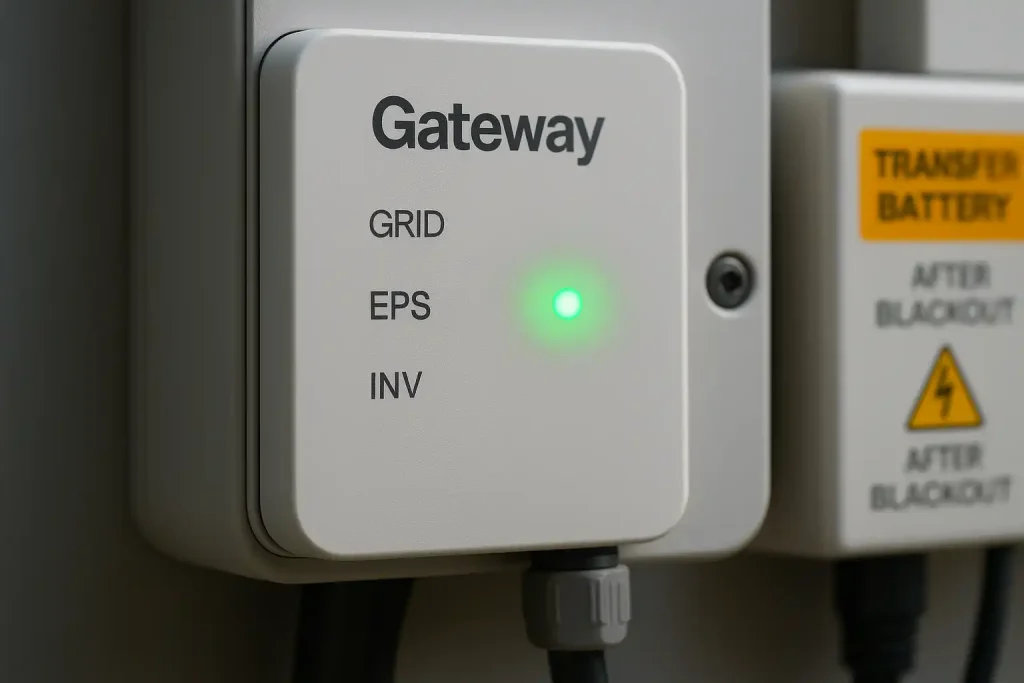
A Solar Gateway which has switched to provide emergency power backup durnig a blackout in Newcastle
Myth 2: “Solar Batteries Don’t Last Long”
The Myth: Some skeptics claim that solar batteries wear out quickly, needing replacement every few years – which would indeed make them hardly worth the cost. This myth may stem from experiences with older battery technologies or confusion with short-lived appliance batteries. And you know what? We get it. It’s not great when consumer giant LG Electronics has a major recall on it’s solar home batteries. If you can’t trust LG – who can you trust?
The Reality: Modern home solar batteries are built to last. Home batteries are simply a new and evolving technology. Problems will and do occur. That’s why it’s important to get a quote from a reputable installer that will use reputable products. Even if problems do occur – and they will – the intaller must be trusted to honour the warranties. Regardless;
The most common type, lithium-ion (including lithium iron phosphate), typically has an operational lifespan of 10–15 yearssolar. Manufacturers usually provide warranties around 10 years (or a set number of cycles), guaranteeing that the battery will still have around 70–80% of its original capacity at the end of the warranty period. In other words, a 10 kWh battery might still deliver about 7 kWh or more of usable storage after a decade of daily use. This longevity is similar to or better than other major home appliances.
Several factors contribute to a battery’s lifespan: its chemistry, usage patterns, and environmental conditions. Lithium iron phosphate (LFP) batteries, which are widely used in home systems, are known for their stability and can endure thousands of charge cycles with minimal degradation. By managing depth of discharge and operating temperature (most battery systems include smart battery management to do this), you can maximize the life of the battery. Proper installation and configuration by professionals like Newy Solar Co also ensure your battery isn’t over-stressed.
All told, fears that you’ll be swapping out an expensive battery every 5 years are unfounded. Today’s solar batteries are long-term assets. In the Newcastle and Lake Macquarie area, where summers are sunny and winters (relatively – not sure about this one – mild), a correctly sized battery can serve a typical household for well over a decade before a replacement or supplemental battery might be considered. By that time, battery technology will likely be even cheaper and better, making the upgrade even more worthwhile. The key is to choose a quality battery product with a strong warranty and have it installed by accredited experts. Do that, and you can expect reliable service for many years – busting the myth of short-lived solar batteries.
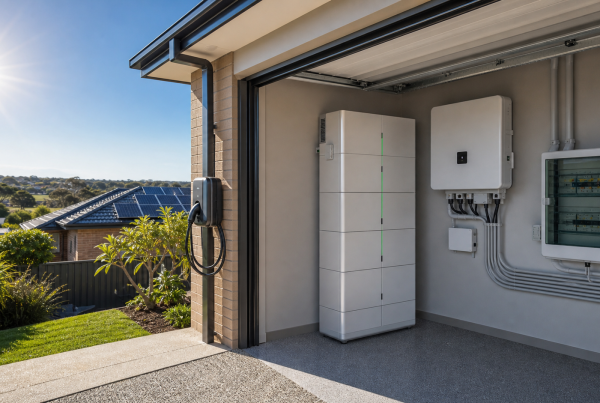
A modern wall-mounted home battery unit (right side of image) installed in a residential garage. Quality solar batteries come with long warranties (often 10 years) and are designed to last well over a decade of use.
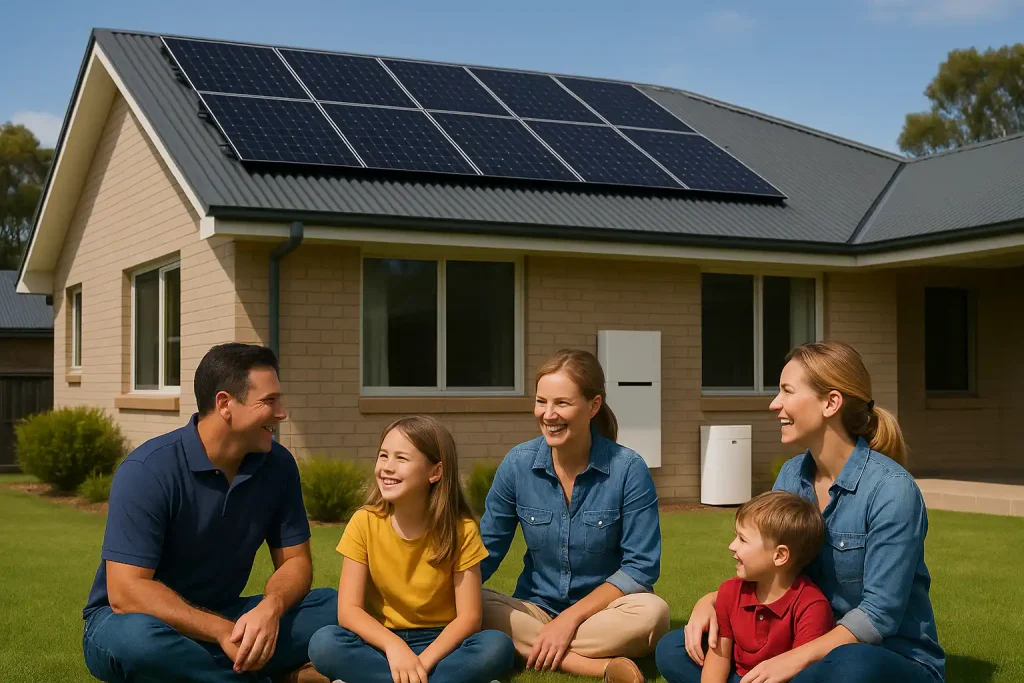
A newcastle family enjoying battery and solar power
Myth 3: “Home Batteries Are Unsafe”
The Myth: Given occasional news stories about lithium-ion battery fires (for example, e-bike and phone batteries), some people worry that a large battery in the home is a fire hazard. This myth claims that solar batteries are not safe to have on your property.
The Reality: Home solar battery systems are very safe when properly installed. It’s true that any energy storage device carries a risk of failure, but the incidence of home battery fires is extremely low, and strict safety standards apply. Let’s look at the data: According to Fire and Rescue NSW, only 3 fires in 2023 and 1 fire in 2022 were attributed to residential battery storage systems in the entire state of NSW. That’s out of millions of electricity-using households – a tiny fraction. In fact, home batteries accounted for under 10% of all lithium-based fires in NSW during that period, far fewer incidents than caused by smaller batteries in devices like e-bikes or scooters. (For perspective, electric scooters and bikes were linked to 22 times more fire incidents than home batteries in 2023!) This shows that the risk of a well-installed home battery catching fire is extremely low, on par with or lower than many common household electrical appliances.
Crucially, modern solar batteries include multiple safety features. They have built-in battery management systems that prevent overcharging, overheating, and deep discharging – the typical triggers for battery issues. In Australia, installations must adhere to rigorous standards (such as AS/NZS 5139, the safety standard for battery energy storage systems) and guidelines set by organizations like the Clean Energy Council. Certified installers (like the team at Newy Solar Co) will ensure the battery is placed in a suitable location, with proper ventilation and clearances as required. They will also only install approved battery models that meet strict safety certifications (for example, IEC 62619 for lithium battery safety in residential application).
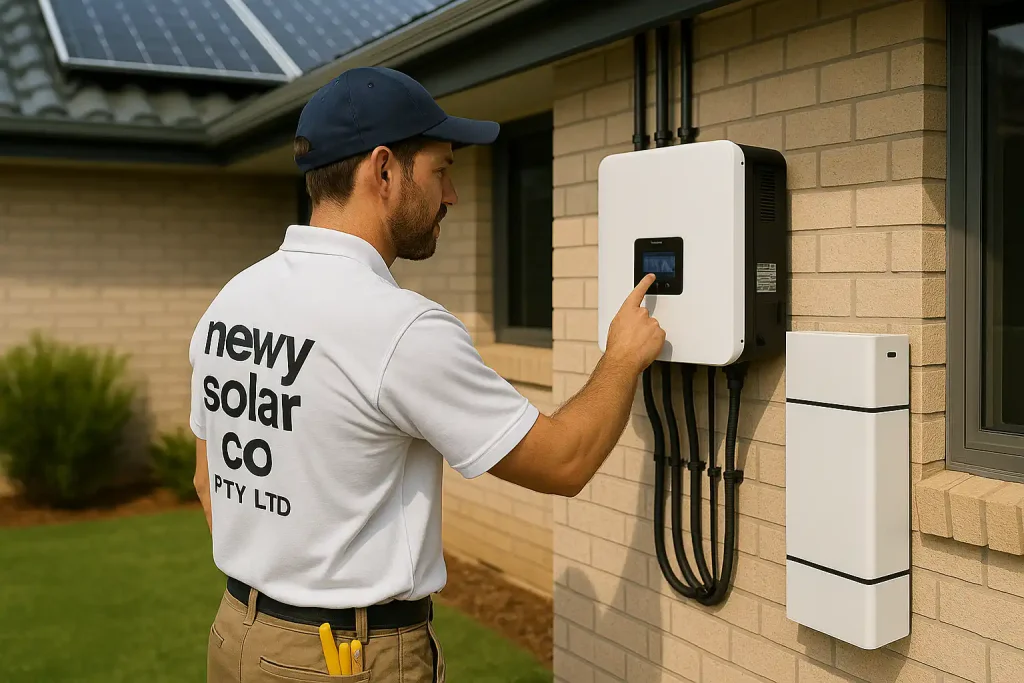
A qualified technician from Newy Solar Co Pty Ltd inspecting a home solar inverter and battery system. Professional installation and adherence to safety standards ensure that home battery systems operate safely. Statistically, residential solar batteries have a very low fire incident rate in NSW.
The reality is that lithium-ion batteries are generally safe – they power our phones, laptops, and electric cars reliably every day. The key is proper handling and installation. Don’t DIY a home battery; use accredited professionals. When you do, the system will include safety disconnects, fuses, and monitoring to detect and address issues early. Fire & Rescue NSW’s recent report concluded that home batteries are much safer than you might think, especially compared to other common battery deviceselitepowergroup.com.auelitepowergroup.com.au. In short, the “ticking time bomb” image of home batteries is a myth. With strong Australian safety standards, thorough manufacturer testing, and quality installation, your home solar battery is designed for safe operationelitepowergroup.com.au. Newy Solar Co has installed many battery systems around Newcastle and Lake Macquarie with an excellent safety record – giving homeowners clean energy peace of mind.
NSC Technician install Hybrid Inverter in Newcastle
Myth 4: “I Can Go Completely Off-Grid”
The Myth: It’s often assumed that adding a battery to your solar panel system lets you disconnect from the grid entirely. Some advertisements even imply you’ll achieve total self-sufficiency and never pay an electricity bill again. In the Hunter Valley, with our sunny climate, people might think a solar battery system means they can cut ties with the utility grid.
The Reality: Most home solar battery setups are not designed for full off-grid living. While solar panels plus batteries will drastically reduce your grid usage, going 100% off-grid requires a much larger and more specialized system. The typical home solar installation in Newcastle or Lake Macquarie might be a 5–10 kW panel array with one battery (let’s say ~10 kWh capacity). This is great for day-to-day self-consumption – you’ll use solar in the day, charge the battery with surplus, then draw from the battery at night. It significantly reduces reliance on the grid, but it doesn’t eliminate the grid connection altogether.
Why? Because there will be times when solar production isn’t enough – for example, extended rainy periods, short winter days, or days of unusually high electricity use. A standard battery can typically store enough energy for one evening’s usage. If you have several cloudy days in a row, you could run out of stored energy and would need the grid as a backup. Truly off-grid systems usually require multiple batteries (or a very large battery bank), an oversized solar array to charge them, and often a backup generator for emergencies. These systems are much more expensive and are usually only used in remote areas with no grid access.
For the average homeowner in an urban area like Newcastle, staying connected to the grid is beneficial. You can draw power when needed (for example, if your battery empties after a long wet week) and even export excess solar power on very sunny days to earn feed-in credits. In fact, most residents choose a hybrid approach: use solar and battery as much as possible, but keep the grid connection as a safety net. Newy Solar Co’s experts often design systems to offset 100% of your net electricity usage over a year (meaning your solar + battery covers your needs on average), but you still remain technically grid-connected.
The takeaway: Going off-grid is achievable, but it requires careful planning and usually a bigger investment. Simply installing one battery doesn’t automatically mean you can disconnect from Ausgrid’s network. If your goal is true off-grid independence, discuss it with with us – you’ll likely need a system with ample panel capacity, multiple batteries, and perhaps a backup generator for winter. Otherwise, enjoy the best of both worlds: maximize your use of clean solar energy and have the grid as a backup. You’ll still dramatically reduce your grid consumption and bills without the risks of being completely off-grid. In the Hunter region, where we have great sunshine but also the occasional stretch of overcast weather, this hybrid approach is usually the most practical and cost-effective choice.
A Newcastle family enjoying the benefits of a solar power and battery storage system. While their solar battery significantly cuts grid usage, most families remain connected to the grid for the occasional times when solar energy isn’t enough. Truly off-grid living requires a much larger system, so most solar homes use a hybrid approach.
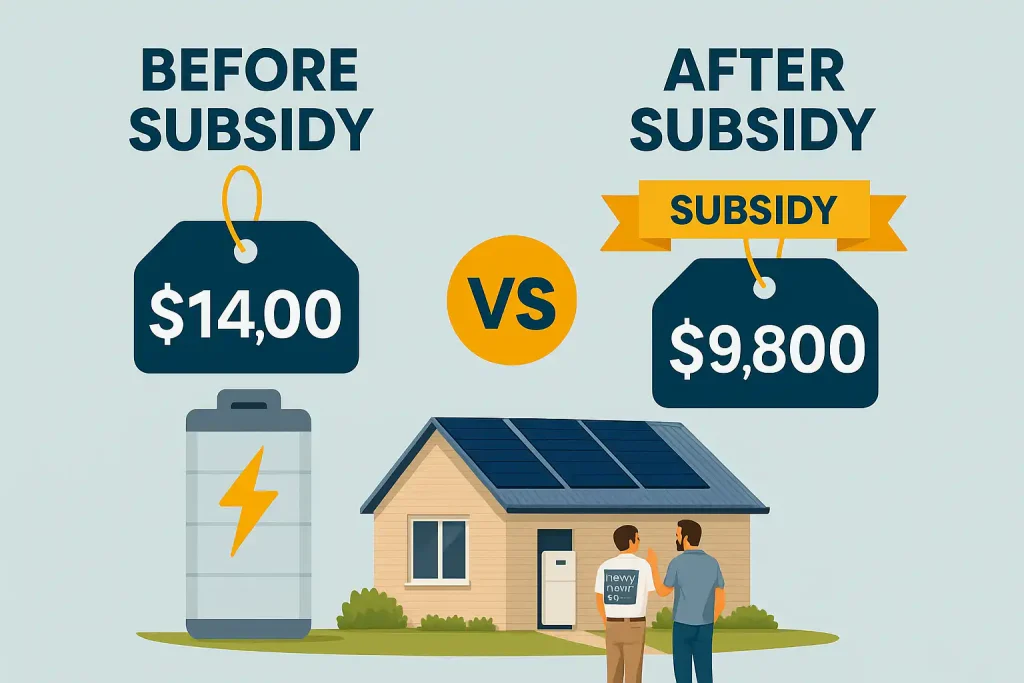
Federal subsidy rebate costs before and after
Myth 5: “If I Have a Solar Battery, I’ll Have Power During Blackouts.”
The Myth: Many people assume that installing a battery means your lights stay on even if the neighborhood loses power. This myth is understandable – after all, a battery is like a big backup, right? Unfortunately, it’s not so simple: standard grid-connected solar systems are not automatically backup generators.
The Reality: Solar batteries can provide backup power during outages, but only if your system is configured for it. A typical grid-tied solar panel system without special equipment will shut off during a blackout (this is a safety feature to protect line workers). Adding a battery alone doesn’t guarantee backup capability – it depends on the inverter and system setup. To have power in a blackout, you need a hybrid inverter or backup inverter that can isolate from the grid and draw from the battery to power your home circuits. Not all solar batteries on the market include this feature by default.
If you do want blackout protection, discuss it with your installer (Newy Solar Co does this as part of battery system design). They will likely set up an Emergency Power Supply (EPS) or backup circuit. This often involves a special inverter that can form a mini-grid for your house when the main grid goes down. Typically, a subset of critical circuits (fridge, some lights, etc.) are wired to be backed up by the battery. When an outage happens, the system disconnects from the grid and the battery/inverter will keep those essential circuits running – as long as the battery has charge. For example, the Tesla Powerwall 2 includes an automatic backup function that can run your home (within the battery’s power limits) during a blackout. Other systems from brands like Enphase, Sonnen, or LG have similar capabilities, but again, only if installed with the right inverter and transfer switch.
It’s important to bust this myth so homeowners aren’t caught off guard. If you assumed your new solar battery would cover you during a storm-induced outage, you might be left in the dark if the system wasn’t set up for that. Always confirm with your installer whether backup mode is included. Many off-the-shelf solar battery packages in NSW do not include backup functionality unless you opt for it. There may be an extra cost for the backup gateway or wiring, but it’s worth it in areas prone to blackouts. Newcastle and Lake Macquarie do occasionally face power outages (for instance, during severe storms), so having a battery with backup can be a huge benefit for peace of mind.
In summary, solar batteries can keep the power on only if configured for backup. This is absolutely doable – just don’t assume it happens automatically. Ask your installer about an EPS or backup circuit. With the proper setup, your battery will kick in during an outage, and you’ll sail through unscathed while others around are fumbling for candles. Without that setup, a battery will only operate when the grid is up (storing and releasing energy for cost savings, but not during grid failure). So, bust the myth by planning ahead: backup power is possible, but requires the right equipment. Newy Solar Co can ensure your system is designed so that when the next big storm hits the Hunter, your home stays comfortably powered.
A local couple in Lake Macquarie using candles during a simulated evening power outage. A solar battery can provide backup power in such blackouts only if your system is equipped with an appropriate inverter/backup circuit. Be sure to discuss backup power needs with your installer when adding a battery.
Conclusion
Solar batteries are transforming how Newcastle and Hunter Valley households use energy, despite the lingering myths. We’ve shown that solar battery facts paint a much more encouraging picture: batteries are becoming more affordable (especially with rebates), they last long, operate safely, and can provide significant benefits – from lower bills to keeping the lights on when it counts. By busting these top 5 myths, residents of Newcastle, Lake Macquarie, and surrounding areas can feel confident about investing in solar storage systems.
When considering a solar battery installation in the Hunter region, it’s important to get accurate information and work with experienced professionals. Newy Solar Co Pty Ltd is a locally based solar expert that can guide you through the options and ensure your system is tailored to your needs – whether that’s maximizing savings, adding blackout backup, or achieving greater energy independence. Don’t let myths hold you back from the advantages of solar technology. With the right system and support, you can enjoy reliable, clean energy and real savings for many years to come. The future in Newcastle and Lake Macquarie is bright and solar-powered – now you have the facts to be a part of it!