Australia’s transition to clean energy is accelerating. With more than four million rooftop solar systems nationwide, the next frontier is storing that sunshine for use after dark. Solar batteries allow households to capture excess solar generation and use it later, smoothing out consumption and reducing reliance on the grid. Until recently, however, high upfront costs kept batteries out of reach for many households. That changes on 1 July 2025 when the federal government’s Cheaper Home Batteries Program (CHBP) comes into effect. This article explains how the program works, who is eligible, and why solar batteries Newcastle homeowners should pay attention. By the end you’ll know how to take advantage of the rebate and how Newy Solar Co. can help you make the most of it.
Why solar batteries matter in Newcastle
Newcastle enjoys abundant sunshine and rooftop solar penetration is growing, but only around 30 % of residential buildings currently have solar systems. Even fewer households pair those panels with a battery – the Clean Energy Council (CEC) estimates that just one in three rooftop solar owners has a battery. Without storage, most households export excess midday generation to the grid and then buy energy back during the evening peak. Batteries change that dynamic:
- Energy independence – A battery allows you to store midday solar and use it later, reducing or eliminating evening imports from the grid. This increases your self‑consumption and insulates you from rising electricity prices.
- Bill savings – CEC analysis shows that rooftop solar currently saves Australian households more than $6 billion per year, and adding a battery almost doubles the typical $1 500 annual bill savings. With a battery you can avoid peak‑demand charges and time‑of‑use tariffs that increase after sunset.
- Grid support – By storing solar energy and discharging during the evening, batteries reduce peak demand and help stabilise the local network. This benefits everyone, not just those who install a battery.
- Clean energy – Using stored solar instead of grid electricity increases the share of renewable energy in your household consumption.
Despite these benefits, batteries have remained expensive. A typical 10 kWh system costs $12 k–$15 k. That’s about to change.
Introducing the Cheaper Home Batteries Program
The Cheaper Home Batteries Program is a national scheme funded by the Australian government to accelerate battery uptake. It’s a $2.3 billion initiative administered by the Clean Energy Regulator (CER) and was last updated on 25 July 2025. Key features include:
Discounted batteries for households, businesses and community organisations
Eligible small‑scale battery systems between 5 kWh and 100 kWh connected to new or existing solar PV systems will receive a discount of around 30 % on the upfront cost. The discount applies to batteries installed from 1 July 2025 and is based on the battery’s usable capacity and the number of small‑scale technology certificates (STCs) the system creates. Importantly:
- The discount is funded by the government, so retailers cannot pass any extra costs onto consumers.
- The value of the discount will decrease gradually until 2030 as battery prices fall.
- Households, small businesses and community organisations are all eligible.
Eligibility and regulatory requirements
To receive the discount, your installation must meet the Renewable Energy (Electricity) Amendment (Cheaper Home Batteries Program) Regulations 2025. Key points include:
- Approved products – Batteries must be on the Clean Energy Council’s approved product list and adhere to relevant safety standards. This ensures the technology meets rigorous testing for safety and performance.
- Accredited installer – Installation must be carried out by an installer accredited by Solar Accreditation Australia. The installer must be present for setup, installation and commissioning.
- Permanent installation – Batteries must be permanently installed at an eligible site (no portable systems) and connected to a solar PV system.
- Proper documentation – The retailer must clearly communicate the value of the discount, warranty information and the anticipated payback period.
The CER has expanded the Small‑scale Renewable Energy Scheme (SRES) to include battery systems. This provides a tested regulatory framework that already supports rooftop solar, including product approval, installer accreditation and an inspections program. These measures ensure consumer protection and safety for home batteries.
How to access the discount
Consumers do not need to apply to the government directly. Instead, the discount will be offered through accredited retailers and installers as an upfront reduction in the purchase price. Most people will prefer this route rather than creating and trading STCs themselves. To make the most of the program:
- Research your energy needs – Determine how much storage capacity suits your household. A 5 kWh battery may help manage evening usage while a larger unit may provide backup during outages. For help sizing your system, contact Newy Solar Co.’s energy experts.
- Seek multiple quotes – Compare offerings from different accredited installers and ensure they include the program discount, system warranty and expected payback period.
- Verify accreditation – Ensure your chosen battery appears on the CEC approved list and your installer is accredited.
- Review your finances – Even with a discount, a battery is a significant investment. Consider financing options or low‑interest loans, and factor in the extended savings on your electricity bill.
Free, independent advice is available through the government’s Solar Consumer Guide. Newy Solar Co. also offers consultations to help you decide whether a battery is right for you.
How much will you save?
Under the Cheaper Home Batteries Program, the upfront cost of a 10 kWh battery could fall from around $12 k–$15 k to $8 k–$10 k, depending on market conditions and the certificate value. When combined with rooftop solar, the CEC reports that batteries nearly double the typical $1 500 annual bill savings, potentially saving households $3 000 or more per year. Payback periods vary with usage patterns, but as electricity prices rise and feed‑in tariffs fall, the economics of storage improve.
In 2024, Australians installed 74 582 household batteries, bringing the cumulative total to 185 798 systems. The CEC notes that only one in three rooftop solar owners currently has a battery, so the CHBP is expected to accelerate uptake dramatically. Modelling suggests a national rebate of up to $6 500 per household could enable 410 000 additional batteries by 2050.
Local programs and community initiatives
Newcastle City Council recognises the importance of storage. Its community renewables bulk‑buy program will launch in early 2025 and will supply and install solar panels, batteries and EV chargers for households and small businesses. This program will help residents access vetted products, finance options and education on virtual power plants. It aims to increase solar uptake in Newcastle (currently just under 30 % of residential buildings) to meet or exceed the NSW average. Expressions of interest for the bulk‑buy program closed on 19 November 2024 and installations are expected to begin shortly.
Community and grid‑scale storage projects
While household batteries empower individual consumers, Newcastle is also benefitting from grid‑scale storage. The Waratah Super Battery, located near the former Eraring power station, is one of the world’s largest storage projects. It has a planned capacity of 850 MW / 1 680 MWh and acts as a “shock absorber” for the grid. Construction began in May 2023 and was completed in October 2024, with partial operation commencing in August 2025 and full operation expected by the end of 2025. This project, along with Ausgrid’s proposed 200 MW / 400 MWh battery at Mayfield West, will strengthen the regional network and complement home batteries by reducing peak demand and improving reliability.
With so many products on the market, selecting solar batteries Newcastle homeowners can trust can be daunting. Consider the following factors:
With so many products on the market, selecting a battery can be daunting. Consider the following factors:
- Usable capacity – Measured in kilowatt‑hours (kWh), this determines how much energy the battery can store. Align the capacity with your household’s evening consumption and desired backup duration.
- Power output – Measured in kilowatts (kW), this determines how quickly the battery can discharge. Higher power ratings support more appliances during outages.
- Round‑trip efficiency – A higher efficiency means less energy lost during charging and discharging. For example, the Tesla Megapack 2XL used in Ausgrid’s Steel River East project has 87 % round‑trip efficiency.
- Cycle life and warranty – Look for warranties covering at least 10 years or a specified number of cycles. Compare throughput guarantees (total energy that can be cycled over the warranty period) and consider how long you plan to stay in your home.
- Chemistry and safety – Most residential batteries use lithium iron phosphate (LFP) or lithium nickel manganese cobalt (NMC) chemistries. LFP batteries are generally more stable and have longer cycle lives, while NMC batteries are more energy‑dense but may degrade faster.
- Integration with existing solar – Ensure your inverter is compatible with the battery or choose an all‑in‑one solution. Check whether the system supports backup power during outages.
Newy Solar Co. works with leading manufacturers and can design a system tailored to your needs. Our team for solar batteries Newcastle residents can rely onwill also help you navigate the Cheaper Home Batteries Program and secure the maximum discount.
Frequently asked questions
Do I need a new solar system to access the rebate?
No. The program applies to batteries connected to new or existing rooftop solar systems.
What capacity battery should I choose?
Capacity depends on your evening usage and whether you want blackout protection. A 5 kWh battery suits a small household with moderate evening usage, while a 10–15 kWh unit provides longer backup. Newy Solar Co. can model your consumption and recommend an optimal size.
Can I still claim state rebates?
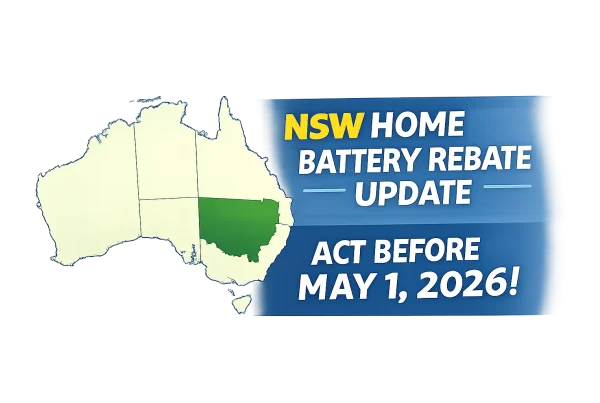
Yes. The Cheaper Home Batteries Program is designed to work with state and territory schemes. Check with the NSW government to see whether additional incentives are available and ensure compatibility with the federal program.
What happens to old batteries?
The government is working with states and territories to minimise waste and enhance battery recycling. As part of the circular economy, responsible disposal and recycling will become a key component of the program.
Is it worth waiting?
Battery prices have been trending downward, and the Cheaper Home Batteries Program will accelerate adoption. However, as more people participate, the discount will decrease annually. If you have rooftop solar and are considering a battery, 2025 may be the best time to install one.
How Newy Solar Co. can help
Installing a battery is a significant investment, but Newy Solar Co. makes it easy. We are accredited installers, and our team specialises in designing battery systems for Newcastle homes. We only use CEC‑approved products and ensure installations comply with all safety and regulatory standards. As a local company, we understand the unique conditions in Newcastle and Hunter Valley.
Ready to store your sunshine and maximise your energy independence? Contact Newy Solar Co. today to schedule a free consultation and quote. Our experts will help you access the Cheaper Home Batteries Program rebate and tailor a solution to your needs.
Call to action
Your solar journey doesn’t end with panels. Take control of your energy future with a smart battery system. Visit our battery solutions page or call us today to learn more about the Cheaper Home Batteries Program by investing in solar batteries Newcastle homeowners trustand how much you could save.
energy with battery storage.
{: .align-center}
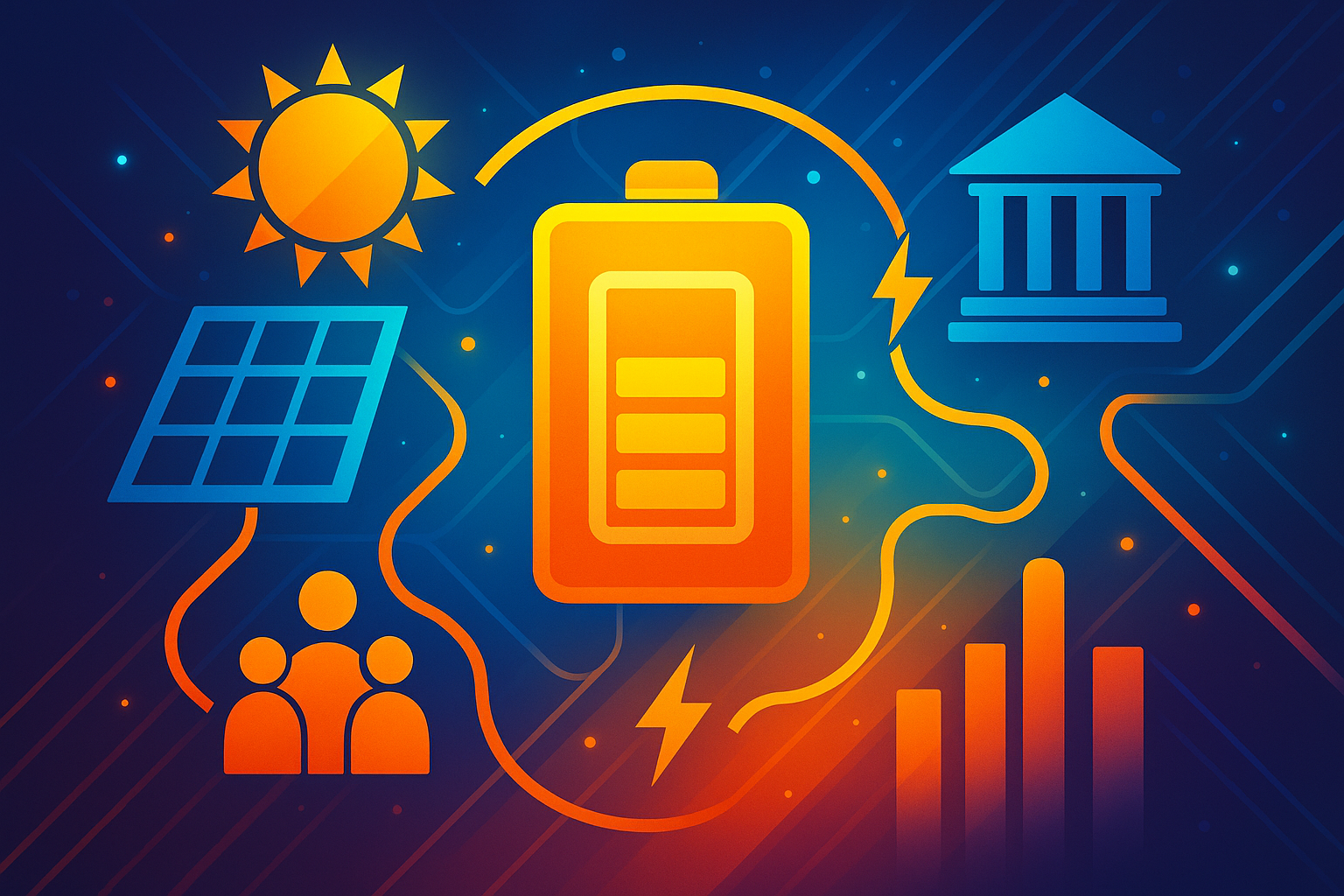
A futuristic scene symbolising the storage of solar energy, with glowing particles and circuitry patterns.
{: .align-center}
An artistic composition evoking community adoption of solar batteries with connected silhouettes.
{: .align-center}
A stylised representation of a government program supporting renewable energy.