Federal Solar Battery Rebate 2025: Newcastle
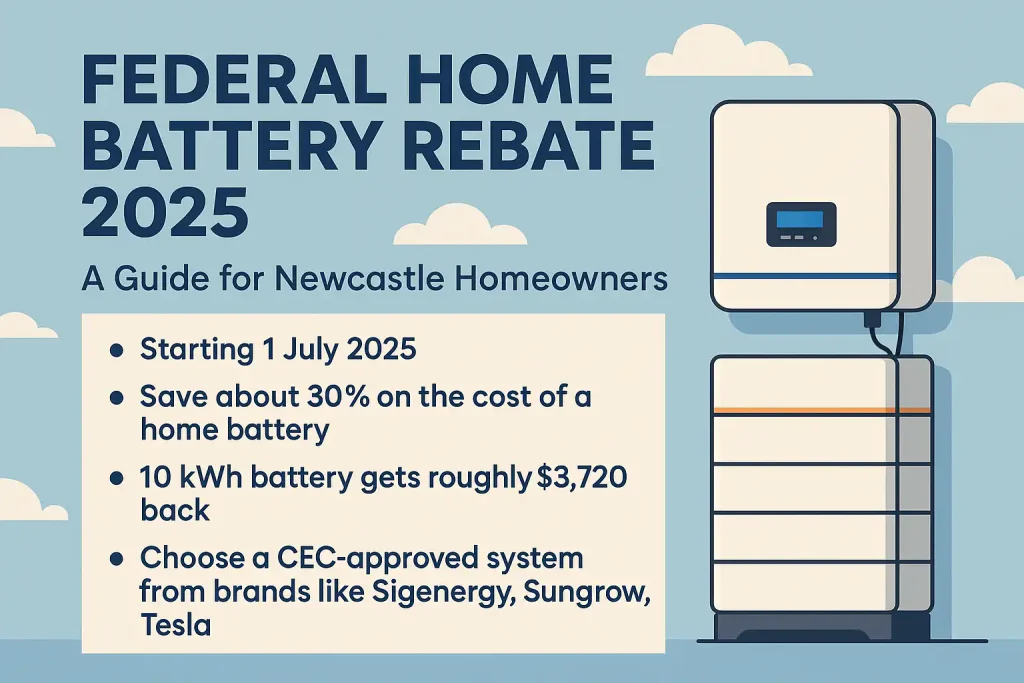
From 1 July 2025, the Australian Government’s new Cheaper Home Batteries Program will offer around a 30% discount on home battery systems. In practice this acts like a federal battery rebate, using the Small-scale Renewable Energy Scheme (SRES) to give about $372 off each kWh of usable battery capacity (in 2025 rates). For example, a 10 kWh battery would earn roughly $3,720 back, up to the first 50 kWh of capacity. This guide explains what the rebate is, who can get it in NSW, how it works, and what savings you can expect. We also cover practical details – approved products (like Sigenergy, Sungrow and Tesla Powerwall), what a home battery installation looks like in Newcastle, how to claim the rebate through your installer, and answers to common questions (backup power, VPPs, etc.).
What is the federal solar battery rebate (Cheaper Home Batteries Program)?
The Cheaper Home Batteries Program is a new $2.3 billion federal scheme to make home energy storage more affordable. Starting 1 July 2025, eligible battery installations will receive roughly 30% off the upfront cost. Technically this is delivered via extra Small-scale Technology Certificates (STCs) under the existing solar scheme. In 2025, each STC is worth about $40, so the rebate works out to about 9.3 STCs per kWh, or roughly $372 per kWh of usable battery capacity. (That value steps down in later years: ~$336/kWh in 2026, $296 in 2027, etc.) The discount applies up to 50 kWh of a system’s usable capacity. In plain terms, installing a 13.5 kWh Tesla Powerwall (two 6.75 kWh units) would get roughly 13.5×$372 ≈ $5,000 off the cost. This is gross – there are installer processing and administration fees – and generally installers do not get the whole $40 STC price – but it will be relatively close.
The goal is to encourage widespread battery uptake so households can store more cheap solar power and help stabilize the grid. The program is national and administered by the Clean Energy Regulator through SRES. (In other words, it follows the same basic process as solar panel rebates – Newy Solar Co will include the discount in the quote and trade the STCs on your behalf.
Who is eligible for the rebate?
The rebate is aimed at homeowners (owner-occupiers) and small businesses that install a qualifying solar battery. Key eligibility points are:
- Property and solar requirements: You must own or live in the property, and it must have (or be getting) a rooftop solar PV system. The new battery must be paired with solar (either existing panels or new panels installed at the same time. In general, grid-connected homes with solar panels are eligible. (Off-grid homes are supported only in special cases – e.g. properties more than 1 km from the grid or where grid connection costs exceed $30k)
- Location: The rebate is available Australia-wide. Newcastle and all of NSW are included. There is no separate means test – any homeowner meeting the other criteria can qualify.
- Battery size: The battery system must be between 5 kWh and 100 kWh (nominal). Importantly, only the first 50 kWh of usable capacity attracts the rebate. (In practice most home batteries are 6–20 kWh.)
- Standards and approvals: The battery must meet Australian standards and be on the Clean Energy Council (CEC) Approved Products List. Likewise, the installer must be accredited for battery installations. For example, new models like the Sigenergy SigenStor and popular units like the Tesla Powerwall 3 are already CEC-approved and thus qualify.
- Connection: The rebate applies to grid-connected systems (paired with solar). Grid batteries will need to be VPP-compatible (able to connect to a Virtual Power Plant) – but joining a VPP network is not mandatory. This simply means the inverter/battery must have the communication capability.
In short, if you’re an homeowner in Newcastle with solar looking to add a battery (5–50 kWh usable) and use it on your home meter, you should qualify for the federal rebate. If you are unsure on your legibility to take part in the federal solar battery rebate, you can contact us and we will confirm for you.
How the rebate works (value and conditions)
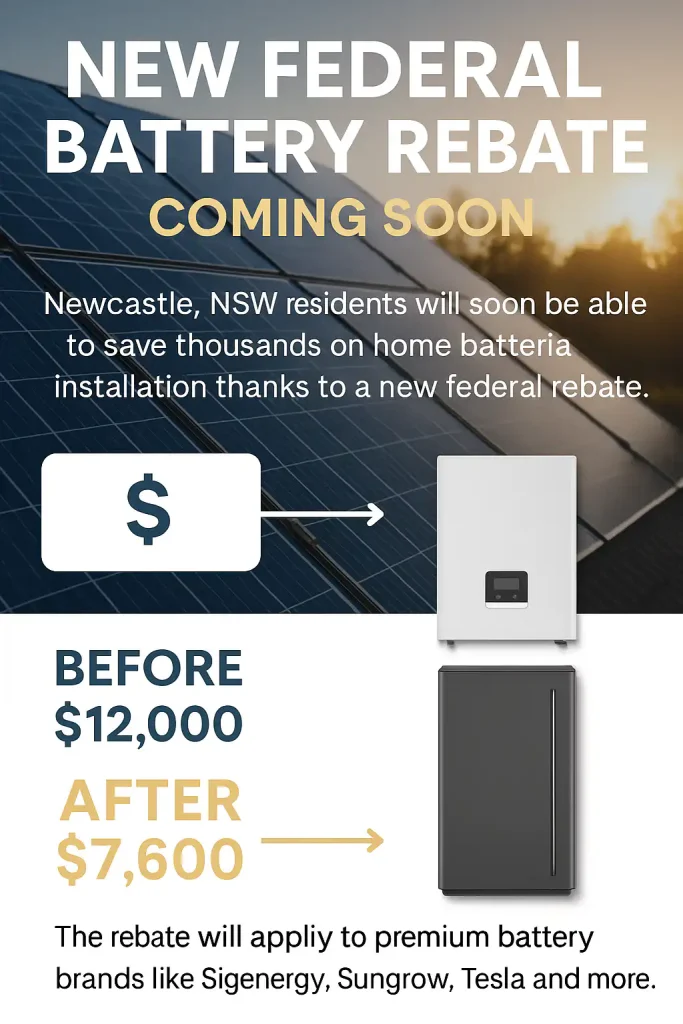
The discount amount is based on the battery’s usable capacity. In 2025, each usable kWh of battery qualifies for about 9.3 STCs, worth roughly $372. (This rate is locked in for installations certified in 2025; it falls over time – about $336/kWh in 2026, $296 in 2027, etc.) Only the first 50 kWh of usable capacity is counted. For example:
- A 10 kWh battery gets 10×$372 ≈ $3,720 off.
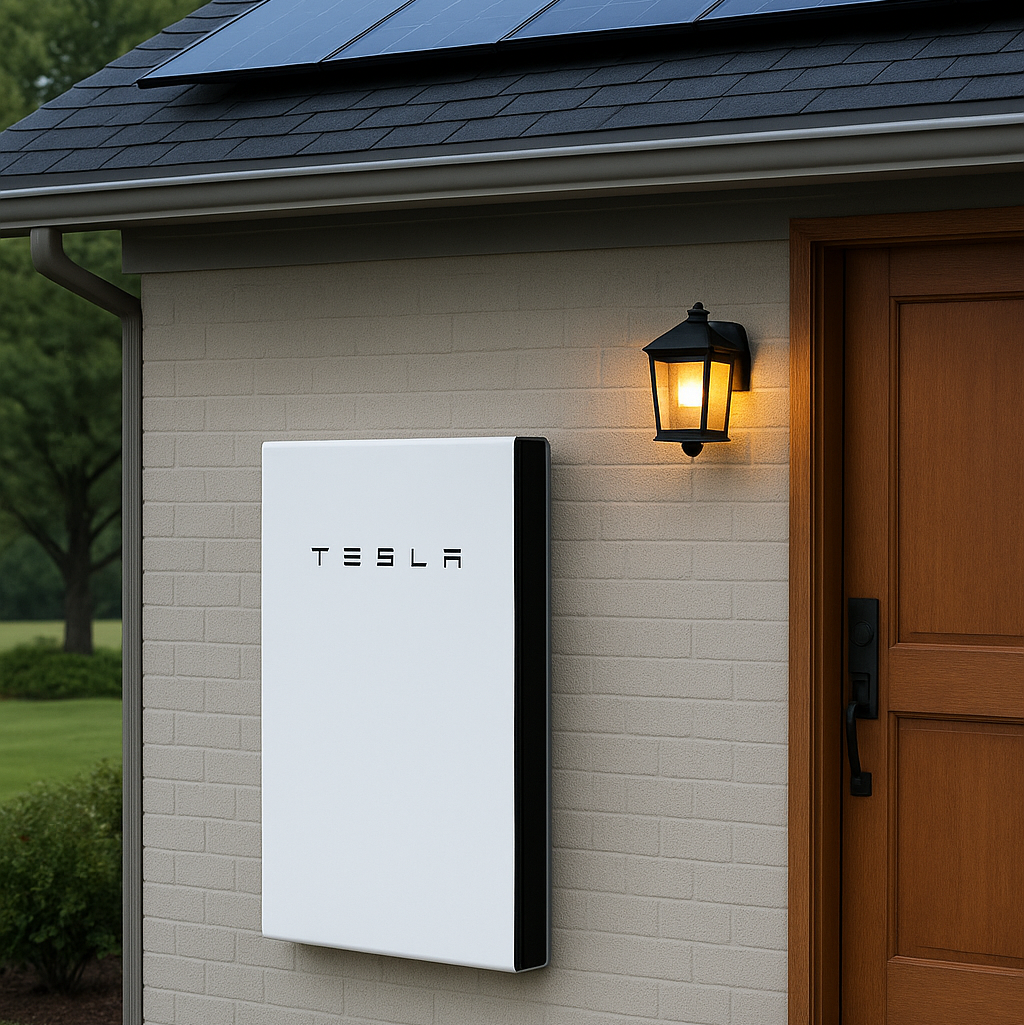
- A 13.5 kWh (Tesla Powerwall 3) gets ~13.5×$372 ≈ $5,022
- A larger 20 kWh system would get 20×372 = $7,440
- Big system (50 kWh cap): At the 50 kWh cap, the maximum rebate is 50×$372 = $18,600. (An ultra-large 50 kWh system might cost ~$40,000 installed, so the net would be ~$21,400.)
When we quote this for you, we will clearly show you the initial cost of the rebate, plus the amount for the rebate. Newy Solar Co Pty Ltd claims the rebate on your behalf – so you do not have to do anything.
The implementation is similar to solar panel rebates. Batteries are added into the STC scheme (via new regulations) and installers handle the paperwork. Every battery installation after 1 July 2025 must have a Certificate of Electrical Compliance (CoC) dated on or after that date to count. This means installers can physically pre-mount equipment, but the final sign-off must be in or after July 2025 for the rebate. You save thousands instantly rather than waiting for years of energy bill savings.
Frequently Asked Questions
It depends on your household’s solar generation and consumption. The scheme allows 5–100 kWh nominal, but only the first 50 kWh is subsidised. We find that Newcastle homes generally find a sweet spot around 8-24 kWh. Bigger means more savings (at $372/kWh), but also higher cost. For example, a 10 kWh system has ~$3,720 rebate, a 20 kWh system ~ $7,440, etc. When we begin to design your system, we’ll work out the best size for your solar power battery.
No, participation in a VPP is optional. The new rules simply require batteries to be VPP-compatible – meaning they have the communications to join a VPP program if you or an operator wants. You won’t lose the rebate if you don’t join a VPP. Joining a VPP can bring small extra payments (some VPP operators pay owners for stored energy), but it’s not mandatory for the rebate or installation.
The program officially commences on 1 July 2025. However, systems installed from 6 April 2025 may still be eligible, provided they are not commissioned (i.e., switched on) until on or after 1 July 2025.
The rebate is available to:
– Homeowners (including landlords and owner-occupiers)
– Small businesses
-Community facilities (e.g., sports clubs, libraries)
There is no means test, and rebates are available per property. Owners of multiple eligible properties may apply for a separate rebate at each location, provided each has its own electricity meter.