Newcastle residents are embracing solar batteries to take control of their energy bills and support the transition away from fossil fuels. With multiple incentive programs now available and record‑breaking growth in battery storage across the National Electricity Market (NEM), there has never been a better time to understand how virtual power plants (VPPs) work and how they can benefit your household. This guide explains VPPs, outlines the NSW government incentive, and highlights why connecting your battery can help you earn more from your solar investment while supporting the reliability of the grid.
What Is a Virtual Power Plant?
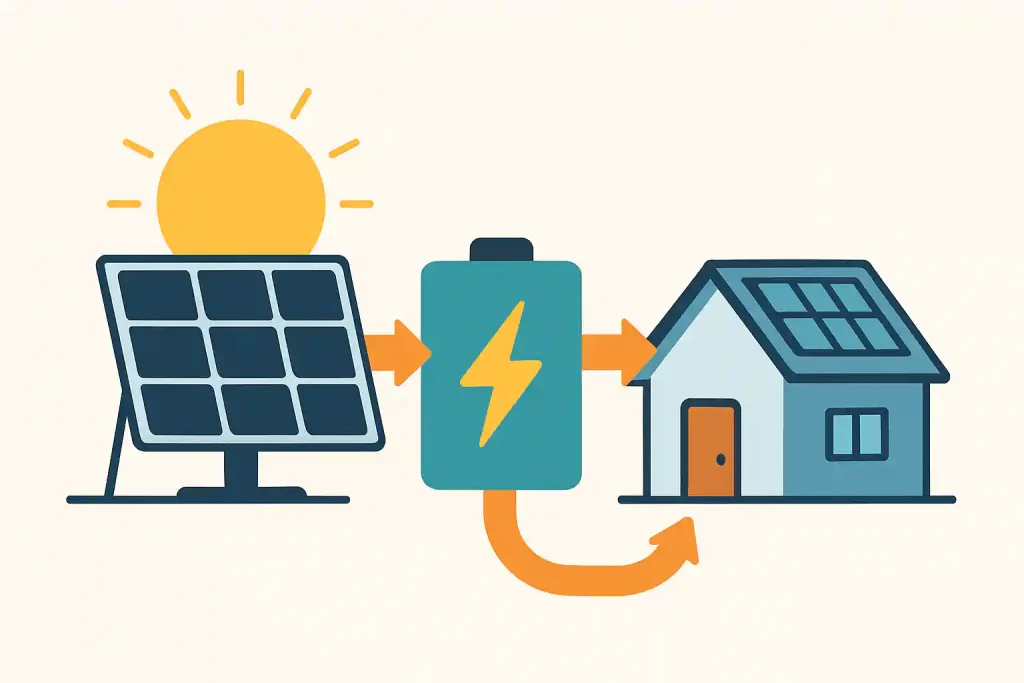
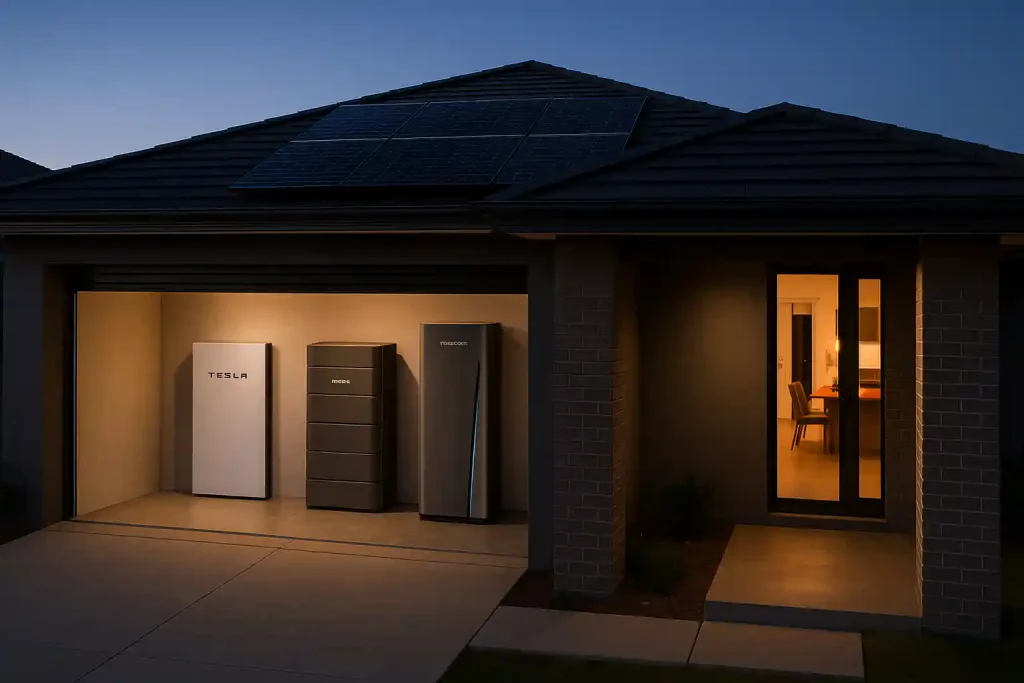
A virtual power plant is a network of small solar batteries that are digitally connected and managed by an energy company or aggregator. When households join a VPP, their batteries remain on their premises but are operated as part of a larger, flexible energy resource. During periods of high demand, the VPP operator discharges electricity from participating batteries into the grid to keep the lights on. At other times, the batteries are charged using rooftop solar or off‑peak electricity.
The NSW government notes that VPPs enable households to sell excess electricity to the grid and pay off their solar panels and battery faster, while helping to stabilise the network during peaks in demand. Because the batteries are networked remotely rather than physically connected, participating households continue to enjoy autonomy over their solar system. Joining a VPP also helps cut carbon emissions by allowing more renewable energy into the grid.
Key features of a virtual power plant
- Remote operation: VPPs are controlled via software, so no additional hardware or wiring is needed beyond a compatible battery and internet connection.
- Aggregate capacity: By coordinating hundreds or thousands of batteries, a VPP can provide significant capacity to the grid, acting almost like a power station.
- Earning potential: Participants receive payments when their battery’s stored energy is dispatched to the grid and may also get an up‑front incentive for signing up to an approved VPP program.
- Grid support: By discharging batteries during peak times, VPPs reduce strain on the network and help NSW achieve its goal of 70 % emissions reduction by 2035.
How the NSW Virtual Power Plant Incentive Works
The NSW Government announced an increase to its VPP incentive on 1 July 2025. Homeowners can now receive an up‑front payment that scales with the usable capacity of their battery. Larger batteries receive a higher incentive, and participants also earn ongoing income when their battery exports energy to the grid. The incentive can be claimed once per National Metering Identifier (NMI) and may be paid as a lump sum, in instalments, or as a credit on your electricity bill.
Importantly, this NSW VPP incentive can be combined with the Australian Government’s Cheaper Home Batteries Program discount. That means if you install a new battery using the federal discount, you remain eligible to claim NSW’s incentive when you connect it to a participating VPP.
Eligibility requirements
According to the NSW Climate and Energy Action department, the program has the following requirements:
- Battery size: Only batteries with a usable capacity between 2 kWh and 28 kWh are eligible for the incentive. Larger batteries may be approved in future, but they currently cannot claim the payment.
- Grid‑connected system: Your battery must be connected to the grid; off‑grid systems are not eligible.
- One claim per meter: The incentive is available once per NMI, meaning you cannot claim multiple incentives for the same property.
- Compatible battery: Not all battery models can be connected to a VPP. Batteries installed under the NSW Peak Demand Reduction Scheme or the Cheaper Home Batteries Program are guaranteed to be VPP‑ready.
Steps to connect your battery
- Choose a VPP provider: Contact multiple providers to compare offers. Each provider sets different rates for your exported electricity and may require you to switch electricity retailers
- . Providers currently offering the NSW incentive include AGL, Amber, Discover Energy, Engie, GloBird, LocalVolts, Nectr, NRN, Origin, Powow and Shinehub.
- Sign the nomination form: Your chosen provider will give you a contract and nomination form. You must sign these documents before receiving the incentive.
- Onboarding: After paperwork is completed, your provider will confirm details and pay the incentive. You will then start earning income whenever your battery is called on to support the grid.
Why Newcastle Households Should Consider a VPP
Financial benefits
- Extra income: By exporting stored solar electricity at peak times, households earn a feed‑in payment plus the VPP incentive, improving their battery’s return on investment.
- Faster payback: The NSW government stresses that connecting to a VPP can pay off your solar panels and battery faster, especially when combined with the Cheaper Home Batteries Program discount.
- Reduced electricity bills: Storing and using excess solar electricity reduces the amount of power you buy from the grid. Energy.gov.au notes that batteries help reduce reliance on the grid and increase solar self‑consumption.
Supporting the energy transition
NSW’s VPP program is part of a broader push to modernise the grid. The state aims to reduce emissions by 70 % by 2035 and reach net zero by 2050. Aggregating household batteries helps replace retiring coal power plants and supports the integration of large amounts of variable renewable energy. According to the Australian Energy Market Operator (AEMO), battery availability in the NEM increased 46 % from 819 MW in Q1 2024 to 1,193 MW in Q1 2025, highlighting the rapid growth of storage.
Resilience and independence
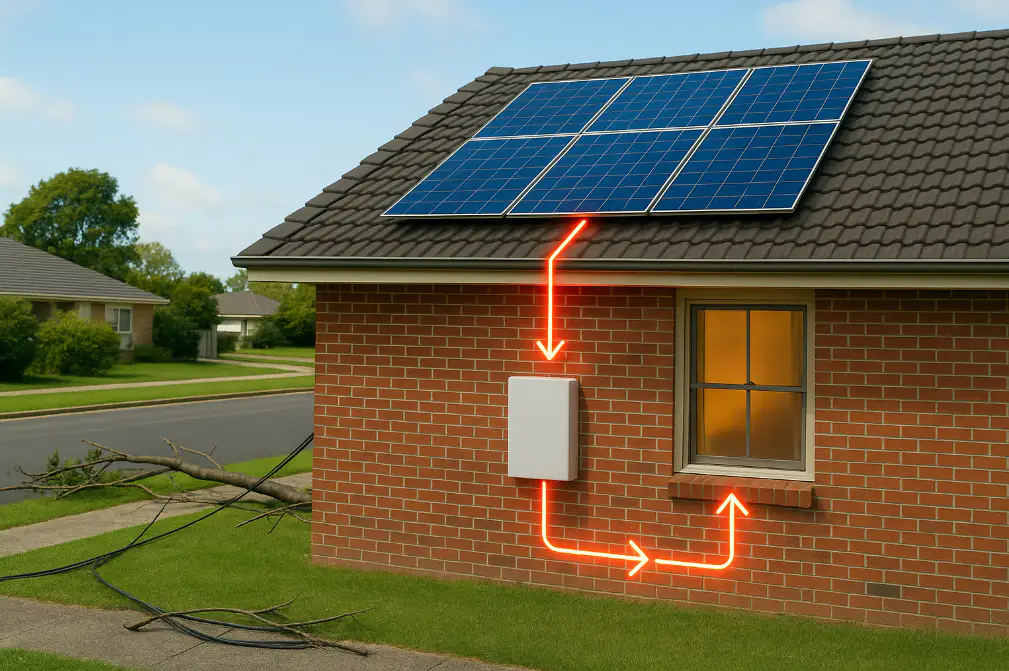
A battery configured for backup can keep essential circuits operating during grid outages. Energy.gov.au explains that an “islandable” solar and battery system can continue to power your home during a blackout and recharge the battery from solar when the sun is shining. For households in rural or outage‑prone areas, this resilience adds peace of mind.

What to Consider Before Joining a VPP
Joining a VPP isn’t right for everyone. Here are key points to weigh up:
- Battery suitability: Ensure your battery is on the Clean Energy Council’s approved list and that both the battery and inverter are VPP‑capable. Under the Cheaper Home Batteries Program, all on‑grid systems must have the technical capability to participate in a VPP.
- Contract terms: VPP providers set their own pricing structures, contract lengths, and conditions for when they can access your battery. Compare rates and read the fine print.
- Energy usage patterns: Batteries are most effective for households that often generate excess solar electricity. Energy.gov.au cautions that a battery only makes sense if you have enough surplus energy to store.
- Internet connection: VPPs rely on a stable internet connection to send and receive signals. Without it, your battery may not respond when needed.
- Backup configuration: Not all VPP‑connected batteries provide backup power. Ask your provider if the system will supply essential circuits during an outage and whether additional hardware is required.
Growing Battery and VPP Trends in NSW and Beyond
Battery storage is booming. AEMO’s Q1 2025 data shows that battery generation output in the NEM reached a record 98 MW, up 86 % on the same quarter in 2024. Major projects commissioned or under construction include the 850 MW/1,680 MWh Waratah Super Battery near Lake Munmorah and the 500 MW Tomago Battery planned for Newcastle’s industrial precinct. Network company Ausgrid is also proposing two 200 MW / 400 MWh batteries, one at Homebush in Sydney and one in Newcastle’s Steel River industrial complex
At the residential level, policy is shifting away from one‑off rebates towards incentives that integrate batteries into the wider energy system. NSW has paused its stand‑alone battery rebate and is focusing on the VPP incentive and Federal Cheaper Home Batteries Program. Retailers must now provide consumers with written statements outlining safety, payback period and cost savings.
Ready to Join a VPP? Talk to the Experts
A VPP can help Newcastle homeowners turn their solar battery into an income‑generating asset. By joining a program, you will receive an up‑front incentive, earn ongoing revenue for exporting energy, and support the transition to a low‑carbon grid. However, it’s important to evaluate your battery’s capacity, compare provider offers, and ensure your system meets eligibility and safety requirements.
Call to action
Newy Solar Co specialises in solar battery systems and virtual power plant solutions. If you’re ready to connect your battery to a VPP or want advice on choosing the right battery, contact our team today. We’ll help you navigate the incentives, select VPP‑ready equipment and get the most value from your solar investment.
References
- NSW Climate and Energy Action. Connect your battery to a Virtual Power Plant (VPP)【555010605211553†L1102-L1156】.
- NSW Climate and Energy Action. Connect your battery to a Virtual Power Plant (VPP) – eligibility and steps【555010605211553†L1199-L1228】【555010605211553†L1339-L1357】.
- Energy.gov.au. Batteries – get to know solar technology【935607264380435†L119-L130】【935607264380435†L132-L153】.
- AEMO. Quarterly Energy Dynamics Q1 2025 (as summarised by Energy Storage News)【877633467413421†L138-L141】【877633467413421†L171-L174】.
- RenewEconomy. Ausgrid pitches its first big batteries for Newcastle and Sydney【865312317806926†L184-L226】.
- Newcastle Weekly. Final Investment Decision reached on Tomago Battery Project【689256496350126†L342-L376】.
- NSW Climate and Energy Action. Virtual Power Plant incentive increase【555010605211553†L1102-L1140】.
- Clean Energy Regulator / NSW government. Battery rebate update【215085640000207†L1101-L1108】.
- Energy.gov.au. Batteries – consumer information【935607264380435†L96-L109】【935607264380435†L182-L199】.