When it comes to home solar battery storage in Newcastle, Maitland, and Lake Macquarie, two cutting-edge contenders are grabbing attention: Sigenergy’s SigenStor all-in-one system and GoodWe’s new ESA Series home battery. Both promise to help households save on energy bills, provide backup power during outages, and maximise the use of your solar panels. But which is right for you? In this in-depth comparison, we’ll break down the pros and cons of Sigenergy vs GoodWe ESA in approachable terms, while also delving into the technical details for those who want a deeper dive.
Whether you’re a tech enthusiast or just a homeowner looking for reliable energy storage, read on to learn how these two battery systems stack up – and what that means for families in the Newcastle, Maitland and Lake Macquarie region.
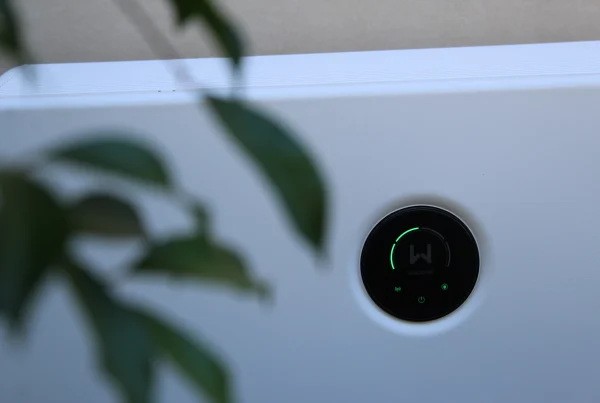
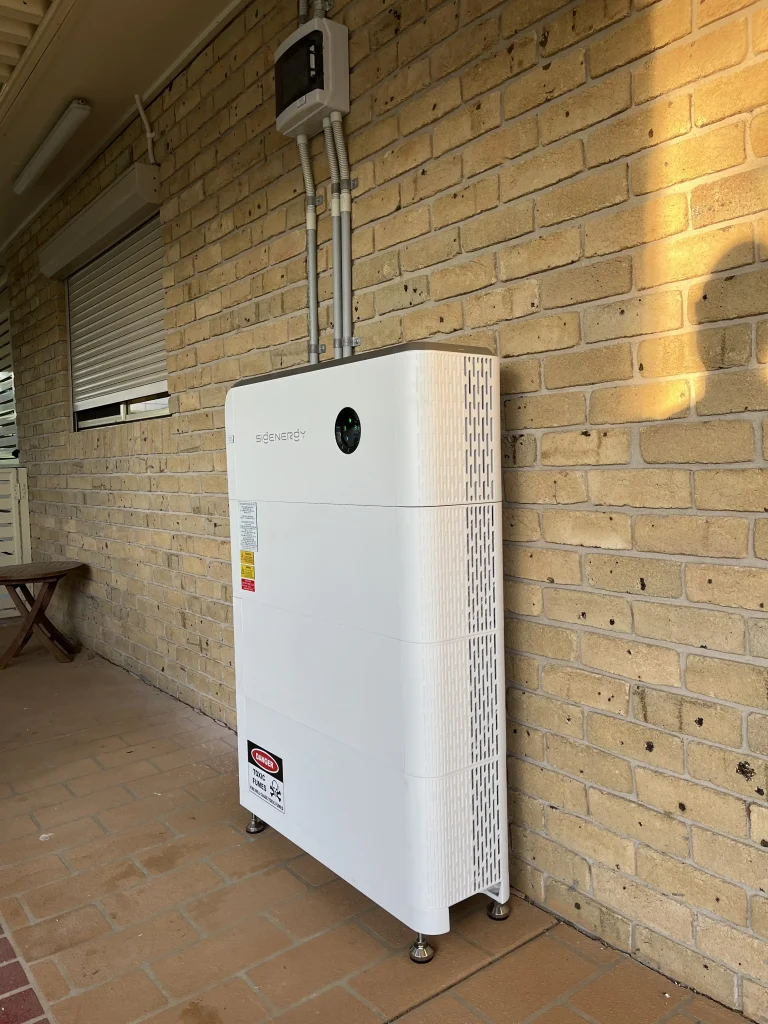
Pictured below: A sigenergy solar battery and a goodwe esa battery.
GoodWe ESA Series: The All-in-One Home Battery Solution
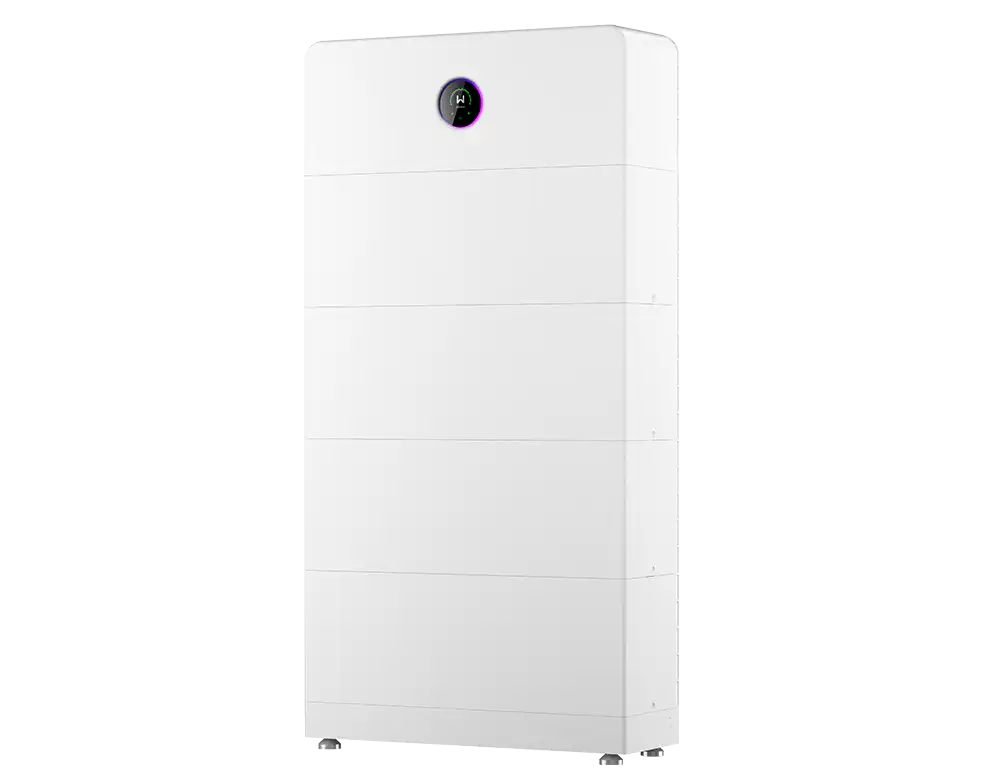
GoodWe’s new ESA Series is a fully integrated home energy storage solution, combining a powerful solar inverter and modular battery stack in one sleek unit. It’s designed for simplicity and whole-home backup, making it attractive for Newcastle and Lake Macquarie homeowners looking for an easy, reliable battery system.
GoodWe at a Glance: GoodWe is a well-established player in the solar industry. Founded in 2010 in China, GoodWe has been serving Australian solar users for over a decade. They’re known for affordable yet solid-performing solar inverters, and their battery systems follow suit with reliability and value. The GoodWe ESA Series, launched in 2025, is their latest home battery offering and has quickly generated buzz as a “powerful yet simple” all-in-one solution.[1][2]
Key Features of GoodWe ESA
The ESA is a single-phase energy storage system that combines a solar inverter and a battery into one unit. It uses safe Lithium Iron Phosphate (LiFePO₄) batteries and comes in modular blocks of 5 kWh or 8 kWh each, so you can start small and grow over time. Each ESA unit supports single phase inverter sizes from 3 kW up to 10 kW and up to 30kw for a three phase unit! This means it is suitable for typical homes usage or even homes with high power needs – or – if you want to be tricky and import power during the off peak period at a high rate – this can be done too. Importantly, you can stack up to 48 kWh of battery capacity in one tower, and even link up to six towers in parallel if you ever needed massive storage – far more than most households would ever require, but it shows how scalable the system is.[1][2]
Some standout capabilities include:
Whole-Home Backup Power:
GoodWe ESA provides UPS-level backup with up to 63 A output, which means it can seamlessly power an entire home during a blackout.[1][2] It detects grid loss and switches to battery power in under 4 milliseconds, so your lights and appliances won’t even flicker during an outage.[1] Unlike some systems that only run essential circuits, the ESA’s high 63 A capacity lets you back up virtually everything at once – a big plus for peace of mind in storm season or unexpected grid failures.
High-Performance Inverter:
The integrated inverter is not only powerful but also flexible. Depending on the model, the ESA has two to four Maximum Power Point Trackers (MPPTs) for the solar inputs. This allows you to connect multiple solar panel strings facing different roof directions, optimising energy generation. It also supports up to 200% solar PV oversizing, meaning you can install roughly double the inverter’s rating in solar panels (great for squeezing more energy on cloudy days or extending solar production hours).[1] The inverter can charge or discharge the battery at a 1C rate, meaning a full charge or discharge in about one hour if needed – useful for quickly soaking up excess solar or responding to high evening demand.
Modular & Mix-and-Match Batteries:
With its stackable module design, GoodWe ESA makes expanding storage straightforward. Each 5 kWh or 8 kWh battery module stacks neatly, and old and new modules can be mixed in one stack without issue.[2] If a battery module needs replacement in five years, you can slot in a new one next to older ones – the system’s battery management handles any differences. This flexibility protects your investment and allows future upgrades with minimal fuss.
Quiet, Indoor/Outdoor Ready:
Impressively, the ESA is fanless, using passive convection cooling for silent operation.[1] Noise is rated under about 30–35 dB (about as quiet as a library).[1][2] The unit is IP66 weatherproof, so it’s built to withstand Newcastle’s coastal air or a Lake Macquarie summer storm if installed outdoors.[2][4][10] Its robust enclosure means you have options to install it in a garage, on an exterior wall, or wherever convenient, without worrying about the elements.
Smart Monitoring:
GoodWe provides real-time monitoring and control via their SEMS portal and mobile app.[1] Homeowners can track solar production, battery charge, and energy usage in real time, and even schedule when the battery should charge or discharge (for example, charging from solar during the day and discharging at the peak grid rate in the evening).
Safety First:
Safety is a major focus in the ESA design. It boasts a six-layer safety protection system, including an AI-driven arc-fault circuit interrupter (AFCI 3.0) that can detect and prevent electrical arcs, and an aerosol fire suppression system built into the battery stack.[1] In the unlikely event of an internal cell failure leading to overheating, the ESA is engineered to suppress fire and isolate faults before they become catastrophic. This provides extra reassurance for those concerned about battery safety at home.
All these features come at a price point that is typically more affordable than many competing batteries. GoodWe has traditionally positioned its products toward the “budget” end of the market while still maintaining solid quality.[1][3] In fact, some solar experts note that GoodWe can deliver similar performance to premium brands like Sungrow at around 20–30% lower cost on average.[3] This value-for-money is a significant reason the GoodWe ESA is expected to become very popular in 2026 and beyond in Australia, as more people look for cost-effective battery options.
In summary, GoodWe’s ESA Series is like the no-nonsense workhorse of home batteries: it’s reliable, highly scalable, and packed with practical features to cover your whole home’s needs. For families across the Hunter region (Newcastle, Maitland, etc.) who want a dependable battery without breaking the bank, the GoodWe ESA is a compelling option. It’s especially attractive if you’re on a tighter budget but still want quality, since GoodWe delivers a great bang for your buck.[3]
Sigenergy SigenStor: The High-Tech Newcomer with All-in-One Power
Sigenergy’s SigenStor is a next-generation 5-in-1 energy storage system. It integrates a hybrid inverter, a modular high-capacity battery, intelligent controls, and even an EV charging option into a single sleek unit. This cutting-edge battery tower can pack up to 48 kWh in one stack, offering Newcastle and Maitland households a future-proof solution with whole-home backup and smart energy management.[3][5]
If GoodWe is the seasoned veteran, Sigenergy is the innovative newcomer in the Australian home battery scene. Sigenergy burst onto the market around 2024 and quickly made waves by “changing the game,” as some installers have put it.[3] The Sigenergy SigenStor is marketed as a “5-in-One” Home Energy Storage System, because it combines multiple functions in one device: a solar inverter, battery pack, battery management system, EV DC charger, and energy management system (EMS) are all integrated.[5][6] In simpler terms, this single unit can handle your solar energy conversion, store large amounts of energy, charge an electric vehicle, manage your household loads, and keep your lights on during a blackout – all with a touch of AI-driven smarts.
Key Features of Sigenergy SigenStor
Massive & Modular Storage:
Sigenergy’s battery modules come in 5 kWh and 8 kWh sizes, similar to GoodWe’s, and they stack vertically with a separate controller/inverter unit on top. A single SigenStor tower can hold anywhere from 5 kWh up to 48 kWh of storage capacity.[3][5] That means with one stack you could far exceed the typical 10–20 kWh needs of most homes – great for those who want the ability to go big (for example, if you plan to add an EV or have a large home). Even better, Sigenergy allows linking multiple stacks for expansion beyond 48 kWh if ever needed.[3] Despite the high capacity, the design is compact – up to 48 kWh fits in a tower under 2 metres tall (about the height of a household refrigerator).[6] Hot-swappable modules make expansion or module replacement easy: you can add more battery modules later without lengthy downtime or rewiring.[5]
High-Power Inverter Options:
SigenStor is available in single-phase inverter sizes like 5 kW, 8 kW, 10 kW, and even 12 kW for heavy-duty needs.[7] There are also three-phase models for larger properties or businesses, supporting up to around 15 kW output and larger stacks (the three-phase versions are what allow using 8–10 modules per stack for 40+ kWh storage).[5] For a typical household on single-phase power in Newcastle or Maitland, an 8 kW or 10 kW Sigenergy unit would comfortably handle running big appliances (like air-con, pool pumps, etc.) simultaneously. The backup response is essentially instant – Sigenergy has an integrated gateway for backup, so it switches to battery power without delay when the grid fails.[6] This means during a blackout, Sigenergy can run your entire house seamlessly, not just a few essential circuits.[3] Whole-home backup is a huge selling point; with Sigenergy, you won’t have to choose which rooms have power during an outage – you can keep everything running as normal (provided your battery capacity and inverter size are sufficient for your loads).
Intelligent Energy Management (AI):
One of Sigenergy’s headline features is its AI-driven battery management. The system actually learns your household’s energy usage patterns over time.[3] Why is this helpful? Because the battery can then make smart decisions automatically, like charging itself from the grid during off-peak hours (when electricity is cheap) and saving that energy to use during peak expensive periods.[3] It can also decide when to hold onto solar energy vs sell it back to the grid, to maximise your savings. For example, if your Sigenergy “learns” that your home typically has a surge in usage at 7 pm when solar is done for the day, it will ensure it has enough charge to cover that period rather than dumping all excess solar to the grid at noon. This kind of AI optimisation could save up to around 40% on energy costs just by smart timing,[3] without you having to lift a finger. Essentially, Sigenergy’s AI is like an autopilot for your home energy, constantly optimising when to charge/discharge to minimise your power bills.
Smart Load Control & EV Charging:
The Sigenergy system comes with a unique “Smart Port” feature that can divert surplus solar power to specific uses like heating your hot water tank, charging a pool heater, or charging an EV, rather than letting that energy trickle back to the grid for a low feed-in tariff.[3] This ensures every drop of your solar generation is used beneficially in your home first. Sigenergy is also one of the only home batteries currently offering a built-in DC fast EV charging integration.[6] This means if you have an electric vehicle, the Sigenergy can charge it directly from the battery (DC-to-DC charging), which is more efficient and potentially faster than going AC inverter to an external charger. It’s also future-proofed for vehicle-to-grid (V2G) capabilities when compatible cars and regulations catch up.[6] For a region like Lake Macquarie and Newcastle where EV adoption is rising, having an EV-ready battery system could be a big advantage. Imagine charging your car from solar energy stored during the day, and even one day possibly using your car’s battery as extra home storage – Sigenergy is built with that vision in mind.
Advanced Safety & Battery Tech:
Sigenergy uses automotive-grade LiFePO₄ cells known for stability and long life.[4] They advertise a very high cycle life – up to 10,000 cycles – and allow 100% depth of discharge, meaning you can use the full capacity of the battery if needed.[4] (Many batteries reserve a portion to extend life, but Sigenergy’s BMS manages to use full capacity while still aiming for a long lifespan.) The safety system is comprehensive, with a five-layer protection design, continuous cell-level temperature monitoring, and internal fire suppression mechanisms built in.[4]
Reports from the field did highlight some early issues – for instance, a small number of Sigenergy units in 2025 experienced overheated connectors and even an isolated inverter fire in one case.[1] This was a setback that made news among solar circles. However, Sigenergy responded quickly by replacing affected units and compensating installers for the work.[1] These issues occurred during the initial rollout rush when the brand was expanding fast. The silver lining is that the company’s proactive response showed a commitment to standing by their warranty and fixing problems. As of late 2025, Sigenergy’s systems are CEC-approved and continually improving, with the hope that early hardware bugs have been ironed out.[7][8] It’s worth noting that both Sigenergy and GoodWe have 10-year warranties on their batteries, with around 70% capacity retention guaranteed at end of life.[11] Sigenergy’s warranty also allows a healthy amount of energy throughput (over 3 MWh per kWh of capacity), which is on par with industry standards.[11]
Monitoring and Software:
Users can watch over their system via the mySigen app, which provides real-time battery status, solar generation, and usage data.[9] The app and cloud platform enable things like remote firmware updates and setting custom modes if desired. But the beauty of Sigenergy is you don’t have to constantly tinker – the AI will handle optimisation, so even non-techy homeowners can benefit from advanced features without feeling overwhelmed. The system essentially “just works” in the background, once it’s set up.
In terms of aesthetics and installation, Sigenergy units have been praised for their modern, sleek look – often compared to the style of a Tesla Powerwall tower, but with a black-and-silver finish that many find attractive.[6] Installers in NSW have noted that despite its sophistication, the Sigenergy is relatively installer-friendly, with quick connectors and a modular design that cuts down on installation time.[5][9] That’s good news because faster installs can mean lower labour costs and fewer hassles for you.
One consideration is price: Sigenergy’s all-in-one system initially came at a premium, especially for smaller setups. If you only need a 5–10 kWh battery, Sigenergy can be a bit more expensive upfront than simpler batteries or modular systems like BYD.[6] However, for larger storage (say 15 kWh and up), Sigenergy often becomes more cost-effective, because its integrated approach avoids the need for separate components and additional controllers as capacity scales.[6] Essentially, the bigger your storage need, the more “worth it” a Sigenergy can be, since you unlock its full potential. In the Newcastle area, we’ve seen tech-savvy homeowners with future EV plans lean toward Sigenergy despite the higher initial cost, viewing it as a long-term investment in a resilient, smart home energy system.
Head-to-Head Comparison: GoodWe ESA vs Sigenergy SigenStor
Now that we’ve introduced both contenders, let’s compare Sigenergy and GoodWe side by side on the factors that matter most for home battery buyers in the Newcastle, Maitland & Lake Macquarie region. Below is an overview of how they differ (and overlap):
Feature Comparison
Integrated Design
- GoodWe ESA Series: All-in-one hybrid inverter + battery in one unit (pre-wired for fast install).[10]
- Sigenergy SigenStor: All-in-one 5-in-1 system (inverter + battery + BMS + EMS, plus optional EV charger) in one unit.[5]
Both minimise separate boxes and simplify installation.
Inverter Power Options
- GoodWe ESA: Single-phase models from 3 kW up to 10 kW.[1] (Currently no 3-phase home model announced in the ESA Series.) Suitable for most homes; multiple units could support 3-phase in theory.
- Sigenergy SigenStor: Single-phase models 5, 8, 10, 12 kW; three-phase up to around 15 kW for larger systems.[5] Can natively support three-phase homes or businesses with specific models.
Battery Capacity
- GoodWe ESA: Modular 5 kWh or 8 kWh LiFePO₄ modules, stack up to 48 kWh per tower (6 × 8 kWh).[1] For more storage, up to six towers can be paralleled (theoretically 288 kWh). Mix-and-match of old/new modules allowed.[2]
- Sigenergy SigenStor: Modular 5 kWh or 8 kWh LiFePO₄ modules, up to 48 kWh per single stack for single-phase.[3] Three-phase controller allows up to 8–10 modules (40–48 kWh) in one stack.[5] Multiple stacks can be linked for even more capacity. Hot-swappable expansion.
Backup Power
- GoodWe ESA: Whole-home backup (UPS) with instant switchover (<4 ms).[1] 63 A output can cover entire house load without an external transfer box.[2]
- Sigenergy SigenStor: Whole-home backup (UPS) with essentially instant switchover (no perceptible delay).[6] High power output (up to 12 kW single-phase, 15 kW 3-phase) can also support entire home during outages.[3] No extra backup gateway needed – it’s built in.
Energy Management
- GoodWe ESA: User-defined schedules and remote monitoring via GoodWe SEMS app.[1] Allows manual control (time-of-use discharge, etc.). No explicit AI learning in current model.
- Sigenergy SigenStor: AI-driven optimisation learns usage patterns to auto-charge/discharge at optimal times (e.g., off-peak charging).[3] Real-time monitoring and smart automation via Sigen app. Can noticeably increase savings through intelligent timing.[3]
Solar PV Integration
- GoodWe ESA: 2–4 MPPTs (depending on inverter size) for flexible PV array design.[1] Supports 200% oversizing of solar panels to maximise energy capture.[1]
- Sigenergy SigenStor: Also offers multiple MPPTs and supports large PV input; in practice, a 10 kW Sigenergy can pair with a very high PV capacity. Both systems integrate seamlessly with solar.
EV Charging
- GoodWe ESA: No built-in EV charger. (GoodWe offers separate EV chargers, but the ESA itself doesn’t directly charge EVs.) Can pair with a standard AC EV charger.
- Sigenergy SigenStor: Built-in DC EV charging – a unique feature.[6] Can charge EV directly from battery/solar (faster and more efficient) and is future-ready for vehicle-to-home/grid when available.[6]
Installation & Placement
- GoodWe ESA: Floor-standing tower, compact footprint. IP66 rated (indoor/outdoor).[2] Fanless cooling (silent).[1] Install is streamlined (pre-wired unit).
- Sigenergy SigenStor: Floor-standing modular tower. IP65/IP66 rated (outdoor safe).[5][4] Uses active cooling (with fans) in some configurations – there have been occasional reports of fan-related issues in early units.[1] Installation is also quick with plug-and-play connectors.[9] Sleek aesthetics often showcased in garages or outside homes.[6]
Safety Systems
- GoodWe ESA: Multi-tier safety: six-layer protection with thermal monitoring, arc-fault detection, and built-in aerosol fire suppression.[1] LFP chemistry. CEC approved.
- Sigenergy SigenStor: Multi-tier safety: five-layer protection with cell-level monitoring, internal fire suppressant, and AI thermal management.[4] LFP chemistry. CEC approved (single and three-phase models).[7][8] Early hardware issues were addressed via recalls/replacements.[1]
Warranty
- GoodWe ESA: 10-year standard warranty (around 70% capacity at end of 10 years). Throughput warranty is competitive; designed for high cycle life.[3][11] GoodWe is an established brand with a long track record.
- Sigenergy SigenStor: 10-year warranty, ~70% capacity retention. Designed for up to 10,000 cycles, which is well beyond 10 years of daily cycling.[4][11] Company is newer but rapidly growing; so far they have backed their product with quick service.[1]
Pricing
- GoodWe ESA: Budget-friendly for what you get. Generally ~20–30% cheaper than similar capacity systems from premium brands.[3] Excellent value, making larger batteries accessible to more households.
- Sigenergy SigenStor: Premium pricing for premium features. Often a bit pricier for small systems, but very competitive (and sometimes cheaper per kWh) at larger sizes.[6] The more of its advanced features you use (big storage, EV, smart control), the better the value proposition.
As seen above, both systems actually have a lot in common: modular LFP batteries, robust backup capabilities, weatherproof enclosures, and remote monitoring. The differences lie in the extras and the approach: Sigenergy leans into high-tech integration (AI, EV charging, full smart home energy control), while GoodWe focuses on delivering core functionality very efficiently and affordably (solid performance, whole-home backup, and scalability without too many frills).
Which One Should You Choose?
That depends on your priorities:
- If you’re on a tighter budget or just need a reliable, no-fuss battery for standard home use, GoodWe ESA is a fantastic choice. It covers all the essentials and even some high-end features (like fast backup and flexible expansion) at a price that won’t break the bank. GoodWe’s long presence in Australia and large installer network is reassuring for after-sales support. Newcastle and Maitland families looking to save money while still getting a big boost in energy independence will find a lot to like in GoodWe.
- If you have a larger energy appetite, love the latest tech, or plan to incorporate an EV and smart home into your energy mix, Sigenergy offers capabilities that are hard to match. For tech enthusiasts or those with future growth in mind (such as adding battery capacity or integrating electric vehicles and smart appliances), Sigenergy’s intelligent features can translate into greater long-term savings and convenience. It’s the battery for those who want the “Tesla of home batteries” experience – sleek, innovative, and forward-looking. Just be prepared to invest a bit more upfront. Many Lake Macquarie area homeowners with big solar arrays or multiple air conditioners, for example, might justify Sigenergy for its ability to handle larger loads and optimise everything automatically.[3][6]
In fact, a fair rule-of-thumb summary some experts give is: “On a budget? Go GoodWe. Need serious storage or advanced features? Go Sigenergy.”[3] Both are quality options, so it’s less about good vs bad and more about good vs best fit for your specific needs.
Technical Deep Dive (For the Curious)
If you’re interested in some nitty-gritty technical details of these systems, this section is for you. Here we’ll briefly touch on additional technical points that tech-savvy readers or those doing deeper research might want to know, without overwhelming the main discussion above.
Battery Chemistry & Lifespan
Both GoodWe ESA and Sigenergy use Lithium Iron Phosphate (LiFePO₄) cells, known for safety (very low fire risk) and longevity. Sigenergy in particular uses large automotive-grade cells and touts up to 10,000 charge cycles lifespan.[4] GoodWe hasn’t published an exact cycle number for the ESA, but typically LiFePO₄ home batteries last 6,000–10,000 cycles (10+ years of daily use). Each has a warranty for 10 years / ~70% capacity remaining.[11]
In terms of warranted energy throughput, GoodWe and Sigenergy both allow around 3 MWh of energy per kWh of battery before the performance warranty is up.[11] For example, a 10 kWh battery might be warranted for ~30 MWh total energy throughput over 10 years. This is roughly equivalent to a full discharge every day – a standard industry expectation.
Efficiency
Both systems are high-voltage DC coupled to solar, which generally gives good round-trip efficiency (~90% or more). GoodWe’s charging is rated at 1C, meaning it can absorb energy quickly when the sun is strong without bottlenecks.[1] Sigenergy’s efficiency is also high; plus, by doing DC-to-DC EV charging, it avoids an extra conversion step, which can improve overall efficiency for EV charging by a few percent. In both cases, you can expect roughly 90–95% of the energy you put into the battery to be usable later.
Multi-Use Applications
Both batteries are VPP (Virtual Power Plant)–ready and comply with required standards for grid connection in Australia. They can feed energy to the grid when needed, and with both you could enrol in programs to earn credits for supplying power at peak times (if you choose to). GoodWe’s reliable inverter tech and Sigenergy’s fast response make them suitable for such programs, as well as emergency grid support.
If you’re thinking about going off-grid or almost off-grid, both systems could theoretically be used in an off-grid configuration (GoodWe ESA even mentions off-grid capability with dual outputs in its specs).[2] However, you’d typically need ample solar and possibly a backup generator for true off-grid living.
Physical Installation Notes
GoodWe ESA’s modules and inverter come as a unit; the base and batteries stack and then the inverter top is mounted. Total weight can be a few hundred kilograms when fully stacked (each 5 kWh module might weigh around 50 kg). Sigenergy’s largest 48 kWh stack weighs over 500 kg in total,[5] so installation needs proper floor support and usually a level ground spot (installers use a trolley or lifting equipment for heavy modules). For both, you’ll want roughly half a square metre of floor area and clearance height of about 2 metres.
They should be installed by certified technicians and must comply with standards like AS/NZS 5139 (battery safety), which covers placement, clearance, and ventilation.
Climate Considerations
Our coastal climate in Newcastle/Lake Macquarie can be humid and sometimes very warm. Both GoodWe and Sigenergy batteries operate in a wide temperature range. Sigenergy, for example, is rated from around –20°C to 55°C ambient.[4] High heat can reduce battery life, so installers will try to position the battery in a shaded or ventilated spot. The IP65/IP66 enclosures keep out salt spray and dust – ideal for near-beach suburbs.
If you live in bushfire-prone outskirts or areas with extreme heat, note that these batteries (like all electronics) may derate (limit charge/discharge) at very high temperatures to protect themselves. Always discuss optimal placement with your installer – e.g., garages are great, or the southern side of a house to avoid direct sun.
Software and Updates
Both systems receive firmware updates that can add features or improve performance. For instance, GoodWe may update charge algorithms or add grid support functions via the SEMS portal. Sigenergy’s app and firmware are likely to evolve as the AI learns from a larger fleet of deployed systems – potentially making the optimisation smarter over time for everyone. Make sure your system stays connected to the internet (via Wi-Fi/Ethernet) for these updates and for you to monitor remotely.
Recent Developments
As of late 2025, GoodWe’s ESA is relatively new in the Australian market – it has been showcased at major industry events and is Clean Energy Council certified.[1] Availability is expected to ramp up heading into 2026, and many in the industry expect it to sell very well due to pent-up demand for an all-in-one like this at a good price.
Sigenergy, on the other hand, had its big rollout through 2024–2025; it gained popularity remarkably fast. However, there has been a bit of a reality check with some support and hardware issues as noted earlier, causing the company to double down on quality control.[1] The good news is that both products are supported by local Australian channels and are eligible for government incentives. For example, NSW’s newer “cheaper home batteries” programs include GoodWe and Sigenergy models on their eligible product lists in various schemes, meaning you could get a subsidy or loan incentive if you install these in certain programs.[6][8]
Always check the latest NSW or federal schemes when purchasing, as they can save you thousands.
Conclusion: Powering Your Home, Your Way
In conclusion, Sigenergy and GoodWe ESA are two excellent home battery systems that each bring something unique to the table for homeowners in Newcastle, Maitland, Lake Macquarie and surrounding areas.
- GoodWe’s ESA Series shines as a cost-effective, reliable workhorse – it’s the kind of battery that does its job day in, day out, keeping your home running and bills low, without any drama.
- Sigenergy’s SigenStor steps up the game as the innovative all-rounder, offering not just a battery but a smart energy ecosystem that can adapt and expand with your lifestyle (especially if you’re eyeing an EV or have big energy demands).
By understanding your own needs and priorities – whether it’s budget, capacity, technology, or backup power – you can make an informed choice between the two. In most cases you’ll pick one system and stick with it, but the key is choosing the one that best matches how you use (or want to use) energy at home.
Both Sigenergy and GoodWe ESA are installed and supported by Newy Solar Co, meaning whichever you choose, you’ll have local experts ensuring it’s set up correctly and operating at its best. Our team has hands-on experience with both systems, and we’ve seen first-hand how they can transform a home’s energy profile – slashing grid consumption, providing backup power security, and empowering homeowners to take control of their energy future.
As the Hunter region continues to embrace renewable energy, having a quality battery is becoming almost as common as having solar panels. It’s an exciting time where families can genuinely aim for near self-sufficiency and protection from rising energy costs. Sigenergy and GoodWe are at the forefront of this movement, turning ordinary homes into smart energy hubs.
In the end, there’s no one-size-fits-all answer – but there is a best fit for your home. This deep-dive comparison is designed to give you the knowledge and clarity to identify which battery might be the perfect match. Both options are winners in their own right, so it’s hard to go wrong.
Feel free to reach out to us at Newy Solar Co for further information, personalised advice, or a quote on installing a GoodWe or Sigenergy system. We’re here to help you power your home, your way – with the best technology available today.
Looking for a quote? Contact us now
References
- SolarQuotes – Reviews & Technical Commentary
https://www.solarquotes.com.au - GoodWe Australia – ESA Product & Specifications
- https://www.goodwe.com.au
- Solar Energy Adelaide – Comparisons & Installer Insights
https://www.solarenergyadelaide.com - PV Magazine Australia – Market & Certification Coverage
- https://www.pv-magazine-australia.com
- Energy Matters – CEC & Product Listings
- https://www.energymatters.com.au
- BESS Australia – Installer Feedback on SigenStor
- https://www.bessaustralia.com.au