
AlphaESS vs GoodWe vs EcoFlow comes down to the capacity your home needs, how the proposed system fits your existing solar, and what the installation includes—not a universal brand winner. The useful starting distinction is that the listed AlphaESS options use 14 kWh modules, GoodWe ESA uses 8 kWh usable modules, and EcoFlow OCEAN 2 uses 8.03 kWh nominal modules.
| Usable battery capacity | Federal battery STCs and estimated value | NSW PDRS incentive with VPP connection |
|---|---|---|
| 14 kWh | ~95 STCs / ~$3,658 | $560 |
| 24 kWh | ~136 STCs / ~$5,236 | $960 |
| 28 kWh | ~152 STCs / ~$5,852 | $1120 |
| 32 kWh | ~156 STCs / ~$6,006 | $1120 |
AlphaESS vs GoodWe vs EcoFlow: what are you actually comparing?
Compare specific systems rather than brand names in isolation. Newy Solar Co installs AlphaESS SMILE M5 / M10, GoodWe ESA all-in-one and EcoFlow OCEAN 2 configurations. A useful proposal should identify the model, module count, confirmed usable capacity and installation scope so you can see what each option actually provides.
The approved specifications here do not establish a winner for efficiency, warranty, noise, app quality or backup performance. An honest comparison leaves those questions open until the relevant documentation and proposed design are available. A larger capacity figure is not, by itself, evidence of a better system for your household.
How do the available module options differ?
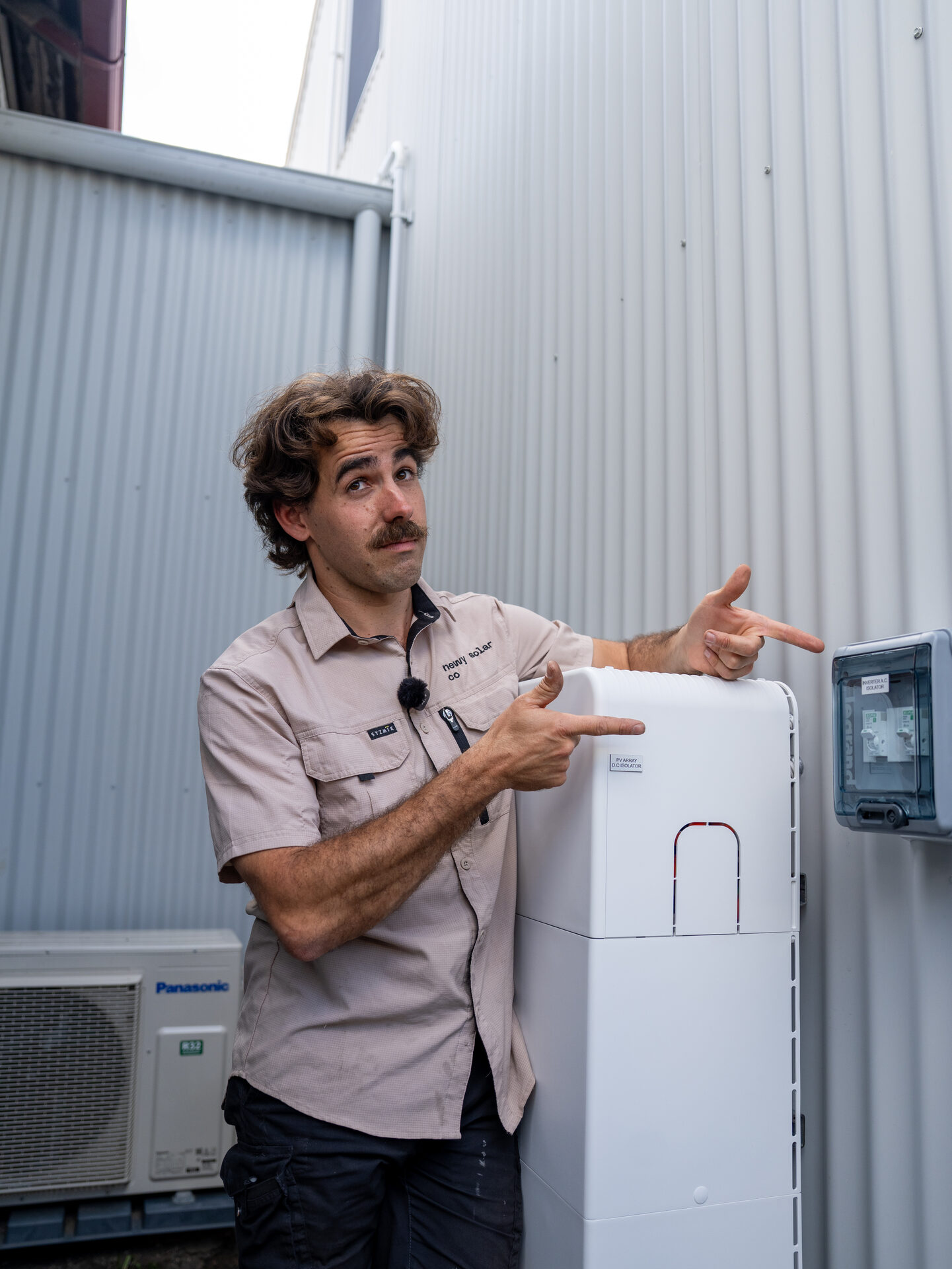
- AlphaESS SMILE M5 / M10: available through Newy Solar Co with one or two 14 kWh modules. Ask the proposal to confirm the complete system’s usable capacity.
- GoodWe ESA all-in-one: available with two, three, four, five or six 8 kWh usable modules. Compare the proposed module count with your household’s storage needs.
- EcoFlow OCEAN 2: available with two, three, four, five or six 8.03 kWh nominal modules. Request confirmed usable capacity before comparing it with a usable-kWh specification.
These are the configurations we install, not a claim that every configuration suits every property. Nor does a choice of module counts establish that adding modules later will be straightforward. If future expansion matters, ask for the conditions and limitations to be documented before choosing the initial system.
Why does usable versus nominal capacity matter?
Nominal capacity and usable capacity describe different things. For a homeowner comparing storage, the practical question is how much energy the specified system makes available for use. Do not treat EcoFlow’s nominal module figure as equivalent to GoodWe’s usable module figure, or assume a conversion that has not been confirmed.
This distinction also matters for incentive calculations, which use usable kWh. Ask every installer to show that figure explicitly rather than leaving you to infer it from a product name. Keep capacity separate from questions about which appliances can run together; ask for the proposed system’s operating limits as well.

How should you choose a size for your home?
Start with electricity bills, any available usage data and the details of your existing solar. Tell the installer when you use electricity and whether your priority is evening consumption, outage preparation or accommodating planned changes at home. Those priorities should guide the comparison before you settle on a brand.
Ask why the recommended capacity suits your household and what would change with a smaller or larger configuration. A good explanation should connect the recommendation to your usage, rather than simply selecting the biggest available option. You can start exploring your setup at /estimator and review the battery range at /batteries.
What should you check about existing solar and backup?
Give the installer your existing inverter details and ask how the proposed battery will connect. Confirm whether the quote retains or replaces existing equipment and whether switchboard or other electrical work is included. Do not assume that a brand recommendation alone confirms compatibility with the system already on your roof.
If backup matters, request a written description of what happens during an outage. Which circuits are included? What operating limits apply? What extra equipment or wiring is required? These are design questions, not reasons to award any of these brands a blanket advantage without checking the actual proposal.
Our Wallsend project, described as “a battery that earns its keep”, is a relevant local battery job. That description does not establish a particular brand, capacity or savings result, so it should not be used to promise the same outcome for another home.
How do battery incentives affect the comparison?
The quick-facts table gives approved capacity examples, not brand-specific entitlements. As checked on 24 September 2026, the federal factor for September–December 2026 is 6.8 STCs per usable kWh, with the full rate to 14 kWh, 60% for the 14–28 kWh portion and 15% for the 28–50 kWh portion.
The estimated federal values assume an STC value of about $38.5. The factor resets each period, so check the timing and eligibility of your proposed installation at /rebate-tracker rather than treating an example as a guaranteed deduction.
The NSW Peak Demand Reduction Scheme battery incentive is $40 per usable kWh, capped at 28 kWh, and requires VPP connection. Read the proposed VPP terms before deciding whether to participate. Compare the household obligations alongside the incentive, not just the amount shown on the quote.
How can you compare quotes without chasing a headline price?
Use /battery-price-index for pricing information and /estimator to explore your setup rather than relying on an unsupported installed-price claim. Compare proposals with equivalent usable capacity and backup scope, then check equipment, electrical work, monitoring setup, warranty documentation and the handover process.
Ask each installer to separate equipment and installation scope from incentives and exclusions. If a proposal is cheaper, establish what differs before deciding it represents better value. The right comparison is between complete, documented installations—not just battery names or module counts.
Want a quote based on your home?
Newy Solar Co’s in-house licensed electricians can assess your existing solar, usage and backup priorities. Visit /quote with your electricity bill and inverter details, and ask us to explain which AlphaESS, GoodWe or EcoFlow configuration fits your home and why.
Common questions
Which is best: AlphaESS, GoodWe or EcoFlow?
There is no supported overall winner from module size alone. Compare the proposed usable capacity, compatibility with your solar, backup scope and complete installation before choosing.
Are EcoFlow’s nominal kWh directly comparable with GoodWe’s usable kWh?
No. EcoFlow OCEAN 2 modules are listed here at 8.03 kWh nominal, while GoodWe ESA modules are listed at 8 kWh usable. Ask for confirmed usable capacity for the complete proposed system.
Will a battery automatically power my whole home during a blackout?
Do not assume that it will. Ask the installer to identify the backed-up circuits, operating limits and any additional work required in the proposal.
Does the NSW battery incentive require a VPP?
Yes. The NSW Peak Demand Reduction Scheme battery incentive requires VPP connection and provides $40 per usable kWh, capped at 28 kWh. Check the VPP terms as well as the incentive amount.
Want this applied to your house?
Our estimator gives you an indicative system size and savings figure in a couple of minutes — then we confirm it against your actual bills.